

In 2026, we are witnessing an unprecedented demand for fintech talent as traditional banks scramble to compete with innovative startups like Brex and Square. Experienced fintech software developer teams are the architects of this digital banking revolution. Imagine trying to build a payment system that processes millions of transactions per second while maintaining bank-level security. This complexity requires developers who understand both advanced programming concepts and financial regulations.
Aloa specializes in creating custom AI solutions that solve those exact problems. With our cutting-edge AI knowledge and elite fintech development teams, we can build out a whole new system from scratch or flesh out an existing one with a fresh feature set. Everything we make is built on a deep understanding of our client’s unique business challenges.
This comprehensive guide explores the essential roles, technical skills, and industry challenges that define fintech application development. You'll discover the specialized tech stacks, regulatory considerations, and emerging trends shaping the future of financial technology development.
Let’s dive in!
TL;DR
- Fintech software developers create secure financial apps such as banking platforms, payment systems, lending tools, and trading solutions. Many businesses partner with an AI Chatbot Development Company to integrate smart chatbots that improve customer support and automate financial services.
- To develop useful and secure fintech software, fintech software developers need financial domain knowledge on top of strong engineering skills, as well as knowledge of financial regulations like PCI DSS and GDPR.
- Key technical skills include modern frontend frameworks (React, Angular, Vue), backend systems (Node.js, Python, Java), real-time processing, and cloud infrastructure.
- Fintech systems handle sensitive financial data and real-time transactions, requiring robust fraud detection and compliance.
- Choosing the right fintech development partner requires proven experience in security, scalability, crisis management, and regulatory complexity.
What are Fintech Software Developers?
A fintech software developer is an expert in creating software solutions for the financial industry. Fintech software developers play a crucial role in designing, developing, and maintaining fintech applications that cater to the needs of financial institutions and their customers.
Fintech application developers are responsible for coding, testing, and debugging applications to ensure they function smoothly and securely. They collaborate with UX designers to create a seamless user experience, integrating features such as mobile banking, lending, budgeting, and payment gateways.
Their general areas of expertise include:
- Mobile App Development: Ensure seamless functionality, security, and user experience in banking apps, investment apps, insurance apps, and other fintech solutions for smartphones and tablets.
- Blockchain Integration: Integrate blockchain solutions into financial systems; Enable secure transactions, smart contracts, and decentralized finance (DeFi) applications, ensuring transparency and immutability.
- Financial Data Analytics: Extract insights from vast amounts of financial data through algorithms and models that help identify patterns, detect fraud, assess risk, and provide personalized recommendations to users.
- AI and Machine Learning Implementation: Integrate advanced AI capabilities, including large language models (LLMs) for customer service, computer vision for document verification, and predictive analytics for credit scoring. This may include building intelligent fraud detection systems, robo-advisors for automated investing, and AI-powered personal finance management tools that adapt to user behavior in real-time.
- Open Banking and API Integration: Modern fintech developers specialize in connecting disparate financial systems through secure APIs, enabling account aggregation, payment initiation services, and third-party financial applications.
Unlike general front-end or backend software developers, fintech application developers must navigate complex regulatory compliance while building applications that handle sensitive financial data. Some of them will specialize in implementing advanced security protocols, fraud detection algorithms, blockchain integration, and real-time market data streaming that general developers rarely encounter.
Essential Skills and Attributes of Fintech Software Developers
Great fintech software developers often exhibit a unique blend of technical expertise and specialized knowledge that extends far beyond traditional software development skills. Look for these essential qualifications when hiring fintech developers:
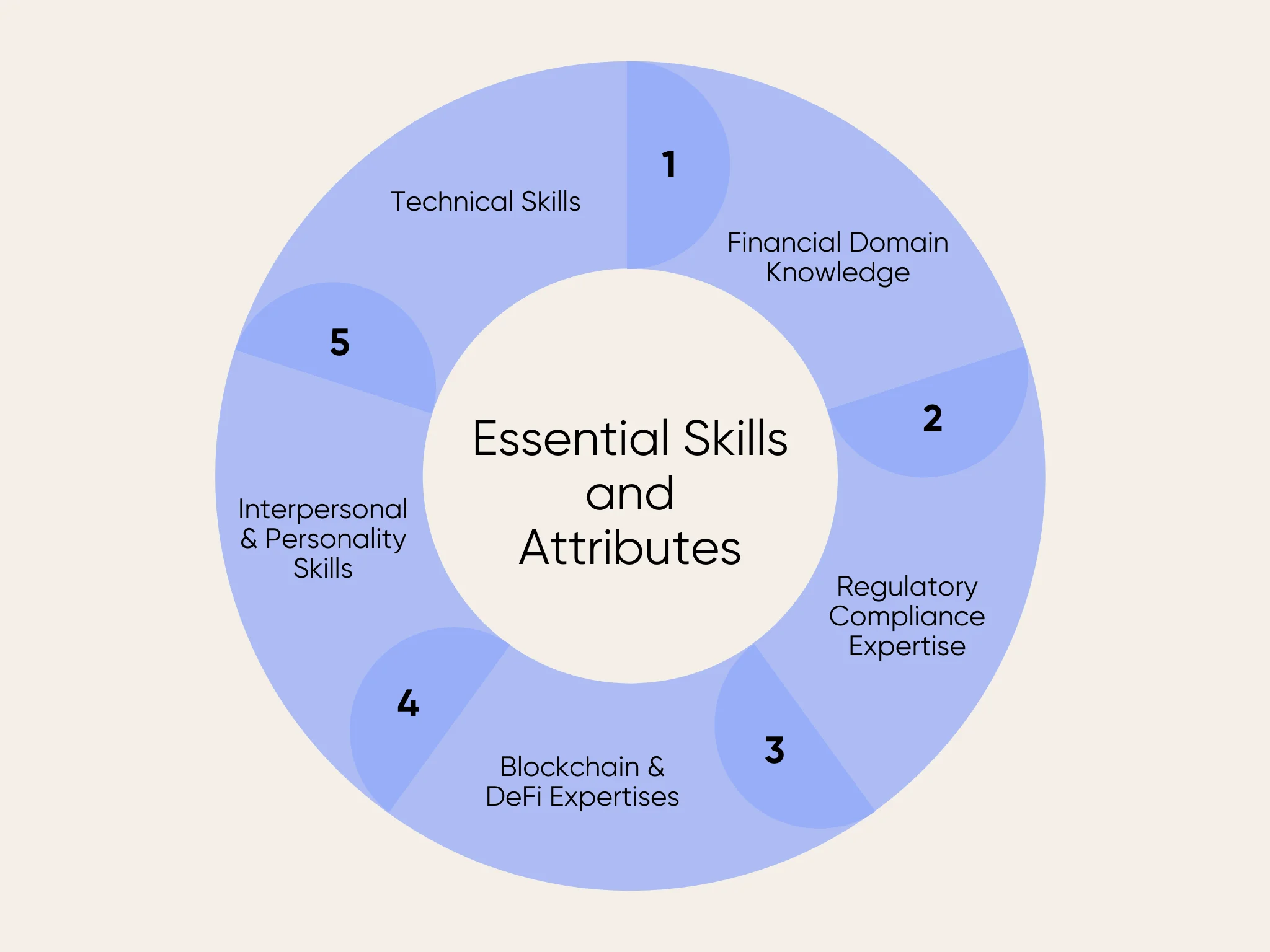
Technical Skills
Evaluate fintech developers using the same core programming competencies as general developers, but you should prioritize candidates with experience in financial-specific implementations.
Look for proficiency in React, Angular, and Vue.js, with demonstrated experience in building secure and robust user interfaces that handle sensitive financial data. You should seek backend developers skilled in Node.js, Python with Django, and Java Spring Boot who have specifically worked on real-time transaction processing, complex financial calculations, or high-frequency trading systems.
Financial Domain Knowledge
Understanding banking APIs and payment processors is essential for fintech software developers to succeed in 2026. You need experience integrating with banking systems like Temenos and FIS, payment processors such as Stripe, Square, and PayPal, and financial data providers like Plaid, Yodlee, and Open Banking APIs.
This specialized knowledge also familiarizes developers with common issues that arise during the development of instant payment verification systems, such as preventing costly payment failures, reducing fraud by implementing proper transaction verification flows, and creating a seamless user experience during account linking.
Regulatory Compliance Expertise
Fintech developers must navigate complex regulatory frameworks, including PSD2 for open banking in Europe, GDPR for data protection, and KYC/AML requirements for customer verification. Features like transaction monitoring, suspicious activity reporting, and automated regulatory reporting systems require a deep understanding of jurisdiction-specific regulations.
Blockchain and DeFi Expertise
This one is optional, but if you’re seeking fintech software developers to build a product that involves blockchain, you would want to look for experience in Ethereum, Solana, and Polygon for building decentralized financial applications.
You need developers who can write smart contracts (automated agreements that execute themselves when conditions are met), connect regular banking apps to cryptocurrency networks, and understand how decentralized lending and trading platforms work. Experience with digital wallets, NFT trading platforms, and systems that move money between different blockchain networks shows developers can navigate the growing world of digital finance that operates independently of traditional banking systems.
Interpersonal Skills and Personality Attributes
In addition to the skills above, you’ll want to look for the following soft skills as well:
- Communication and Collaboration: You need developers who can explain complex financial concepts to non-technical stakeholders like compliance officers and business analysts, while working effectively in cross-functional teams that include UX designers, product managers, and regulatory experts.
- Problem-Solving and Critical Thinking: Look for candidates who can troubleshoot intricate issues like payment processing failures, optimize code for high-frequency trading systems, and analyze complex financial data flows to identify bottlenecks and security vulnerabilities.
- Adaptability and Continuous Learning: Seek developers who stay current with rapidly evolving fintech regulations, emerging technologies like AI-powered fraud detection, and new financial instruments, demonstrating willingness to learn specialized domains like cryptocurrency, robo-advisory platforms, and embedded finance solutions.
Technology Stack and Tools for Fintech Development
Building robust fintech applications requires developers to master a diverse set of technologies that can handle the unique demands of financial services. You'll find that successful fintech developers use these common tools and frameworks to create secure, scalable, and compliant financial solutions:
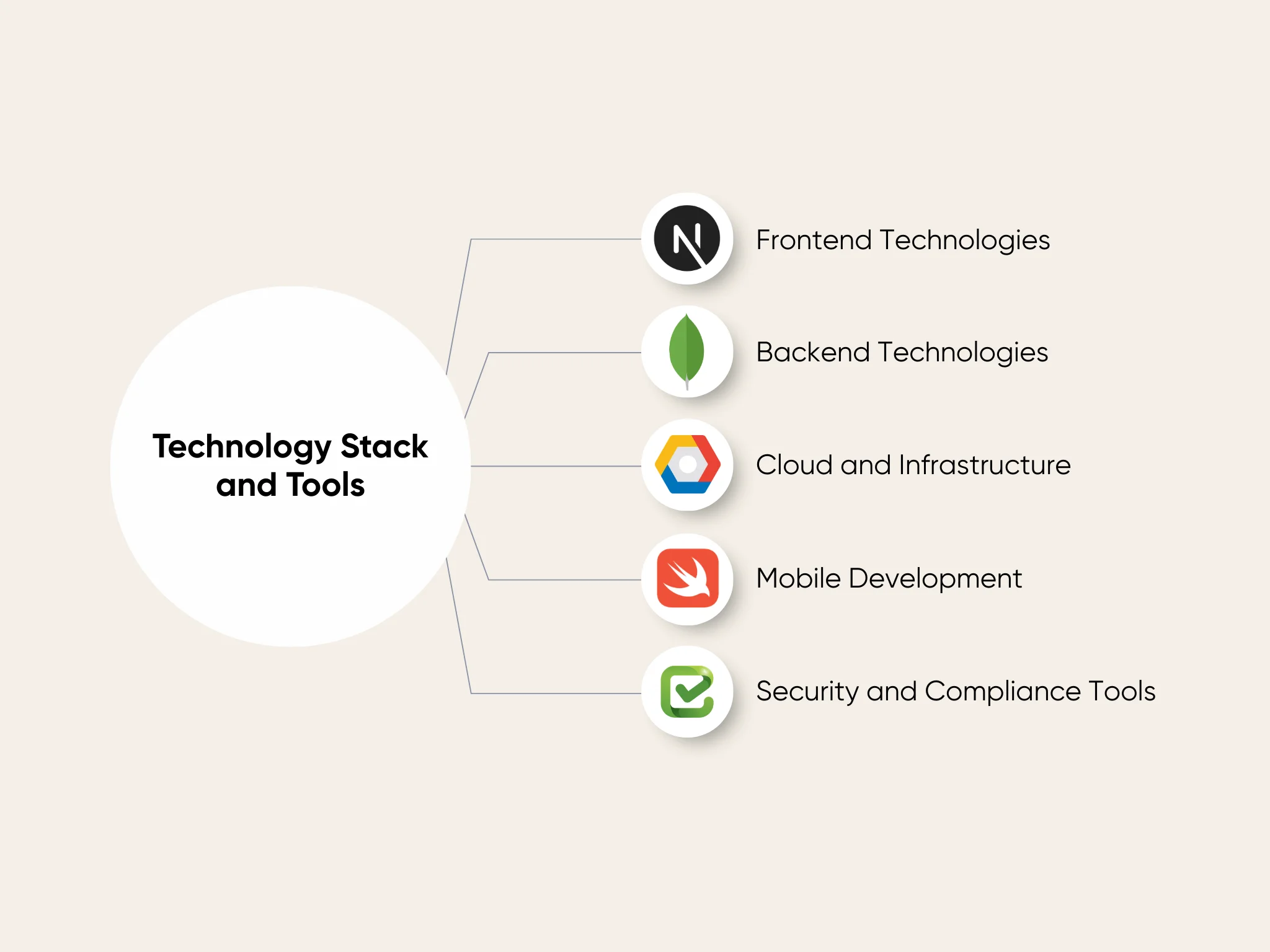
Frontend Technologies
- React with TypeScript Essential for building secure user interfaces with type safety for financial calculations
- Essential for building secure user interfaces with type safety for financial calculations
- Next.js: Provides server-side rendering for fast-loading trading platforms and dashboards
- Provides server-side rendering for fast-loading trading platforms and dashboards
- TensorFlow.js Enables client-side machine learning for real-time fraud detection and risk assessment
- Enables client-side machine learning for real-time fraud detection and risk assessment
- Angular
- Vue.js
- D3.js or Recharts Display AI-generated investment insights and predictive analytics
- Display AI-generated investment insights and predictive analytics
- Material-UI or Tailwind CSS
Backend Technologies
- Python with FastAPI: Best choice for integrating machine learning models for credit scoring and fraud detection
- Best choice for integrating machine learning models for credit scoring and fraud detection
- Node.js with Express Handles real-time payment processing and high-frequency transactions
- Handles real-time payment processing and high-frequency transactions
- Java Spring Boot Enterprise-grade solution for large banking systems requiring robust security
- Enterprise-grade solution for large banking systems requiring robust security
- PostgreSQL ACID-compliant database for financial transactions
- ACID-compliant database for financial transactions
- MongoDB
- Redis
- Apache Kafka
- Vector databases (Pinecone, Weaviate) Store financial embeddings for recommendation engines and similarity-based fraud detection
- Store financial embeddings for recommendation engines and similarity-based fraud detection
Cloud and Infrastructure
- AWS (SageMaker, Lambda, EC2) SageMaker specifically for training and deploying financial AI models
- SageMaker specifically for training and deploying financial AI models
- Google Cloud Platform (Vertex AI) Integrated ML pipelines for processing financial data
- Integrated ML pipelines for processing financial data
- Microsoft Azure
- Docker & Kubernetes Orchestrate both traditional services and AI model containers
- Orchestrate both traditional services and AI model containers
- Terraform
- MLflow Manage AI model lifecycles for credit scoring and robo-advisory systems
- Manage AI model lifecycles for credit scoring and robo-advisory systems
- Kubeflow Automated model training pipelines
- Automated model training pipelines
Mobile Development
- React Native Cross-platform development for consistent fintech experiences
- Cross-platform development for consistent fintech experiences
- Flutter Google's framework for building native mobile apps
- Google's framework for building native mobile apps
- Swift (iOS)
- Kotlin (Android)
- Core ML On-device AI for iOS fraud detection without sending data externally
- On-device AI for iOS fraud detection without sending data externally
- TensorFlow Lite Android on-device machine learning for privacy-preserving AI features
- Android on-device machine learning for privacy-preserving AI features
- Biometric authentication APIs
Security and Compliance Tools
- AWS KMS Key management for encrypting sensitive financial data
- Key management for encrypting sensitive financial data
- HashiCorp Vault
- Veracode
- Checkmarx
- Splunk
- Datadog
- Darktrace AI-powered security platform that learns financial fraud patterns
- AI-powered security platform that learns financial fraud patterns
- AWS Macie Uses machine learning to classify and protect sensitive financial information
- Uses machine learning to classify and protect sensitive financial information
- Microsoft Purview
Regulatory Compliance and Security in Fintech Development
Understanding regulatory compliance is critical. It’s about protecting your business from devastating lawsuits, maintaining customer trust, and ensuring your fintech product can actually operate legally in your target markets. This is why it’s important to ensure that your prospective fintech developer hires understand compliance during vetting and onboarding:
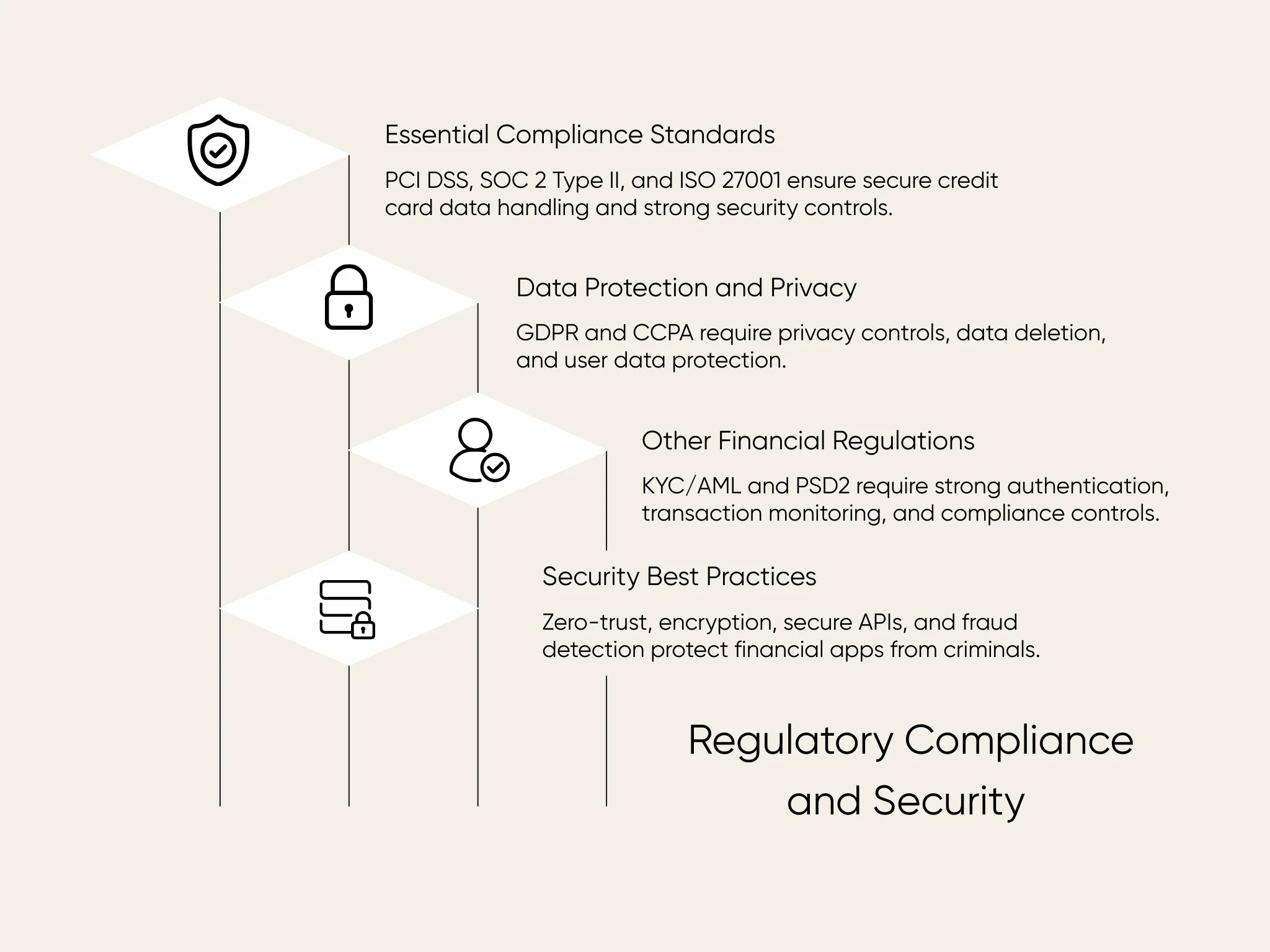
Essential Compliance Standards
PCI DSS, or Payment Card Industry Data Security Standard, governs credit card data handling. Violations can cost $500,000 per incident and loss of payment processing. SOC 2 Type II proves your security controls to customers and partners. ISO certifications like 27001 demonstrate information security management.
During interviews, ask candidates to explain specific PCI DSS encryption requirements and how they've implemented secure coding in financial projects.
Data Protection and Privacy
GDPR violations cost up to 4% of global revenue, and CCPA requires data deletion and privacy controls for California residents. Test candidates by asking how they'd design user data export systems and implement granular privacy controls meeting both regulations.
Other Financial Regulations
KYC/AML failures can result in criminal charges and business shutdowns. PSD2 requires Strong Customer Authentication for European operations. These need technical implementations like transaction monitoring and real-time reporting built from day one.
Evaluate candidates on designing automated suspicious activity detection and KYC workflows that balance verification with user experience.
Security Best Practices
Financial apps are constant targets for sophisticated criminals. Zero-trust architectures verify every transaction and user action. You need developers experienced in encryption, secure APIs, and incident response. Screen candidates by asking them to secure payment APIs, implement authentication controls, and design fraud detection logging without storing sensitive data.
Problems Fintech Application Developers Solve
Financial institutions face unprecedented challenges in 2026 as customer expectations for instant, secure, and seamless digital experiences continue to rise. You need fintech developers who can solve these complex problems while navigating an increasingly regulated and competitive landscape:
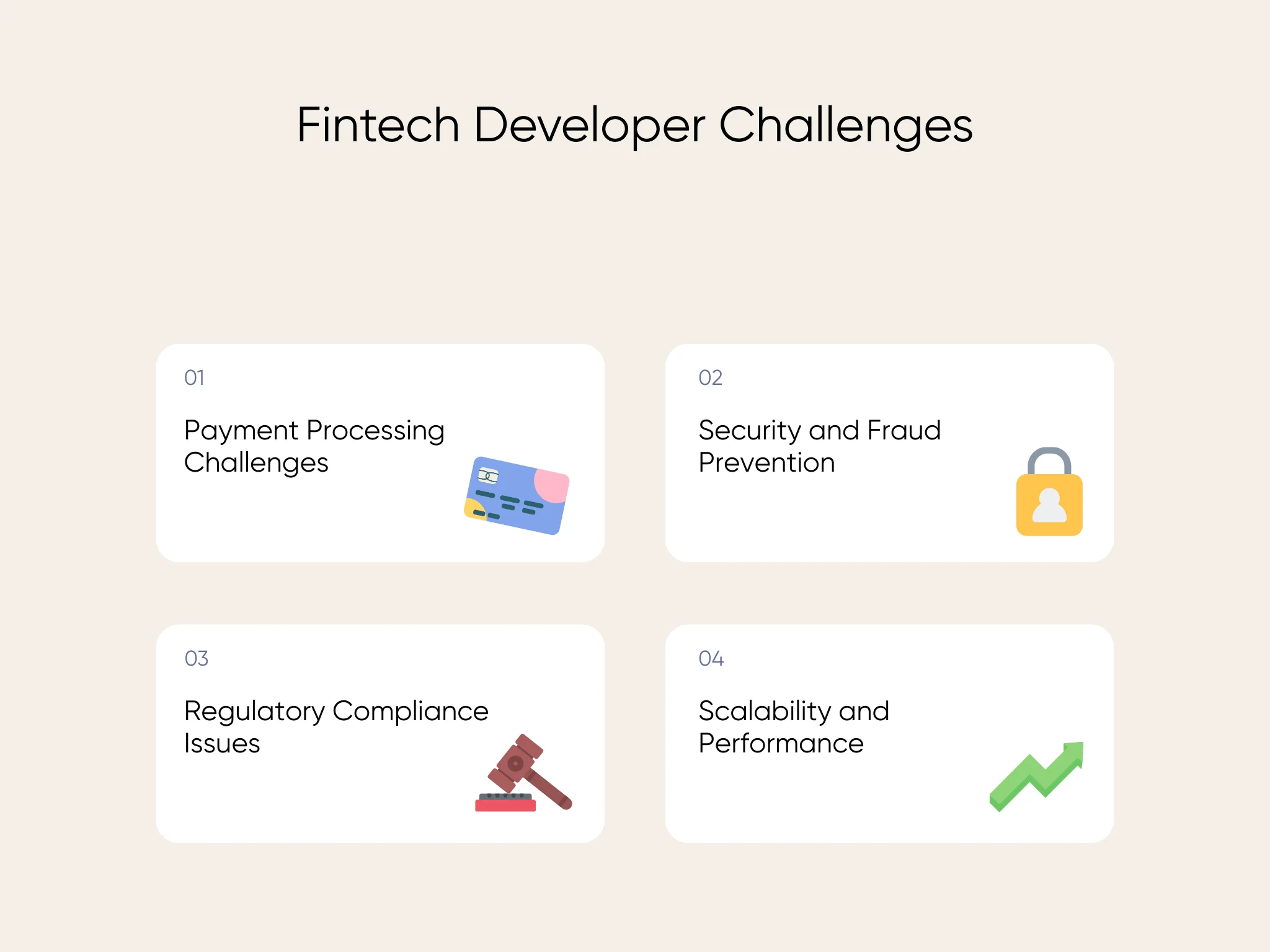
Payment Processing Challenges
Think about how frustrating it is when a payment fails during checkout. As a customer, you probably backed out of the purchase entirely. As a business, you're losing customers every second your system is down.
Modern payment systems must handle millions of transactions per second while maintaining response times under 200ms that customers expect from digital payments. Fintech developers solve issues like this. You need developers who can build systems that handle Black Friday-level traffic spikes of 300% above normal without crashing.
Security and Fraud Prevention
This may be obvious, but financial fraud costs the industry $5.8 billion annually, making every transaction a potential target for sophisticated criminals.
To succeed in 2026 and beyond, you need AI-powered fraud detection that analyzes patterns in real-time, reducing false positives by 60% while catching attacks that traditional systems miss completely.
Regulatory Compliance Issues
Regulatory pressure on fintech firms is rising, with around 78% of companies reporting a higher level of scrutiny from regulators in 2025. Having developers manually update systems is no longer a practical approach. You need automated compliance built into your architecture.
Fundamentally, your developers must understand embedded compliance, where regulatory checks happen automatically during every transaction, not as separate audit processes.
Scalability and Performance
If you're building a fintech platform, you need developers who can create systems that stay online 99.99% of the time while handling thousands of data updates per second during peak hours.
Auto-scaling cloud infrastructure can automatically add more capacity when markets get volatile and scale back during quiet periods, so you only pay for what you actually use. While there’s more than one way to approach this, you’ll want to look for developers experienced with event-driven architectures that let different parts of your system scale independently based on real demand.
Fintech Software Developer Salary and Cost Considerations
Fintech developer salaries have increased significantly in 2026 due to growing demand for AI-integrated financial applications and specialized compliance expertise. You'll find that US-based fintech developers now earn between $95,000 and $180,000 annually, with senior developers specializing in AI and blockchain commanding salaries up to $220,000 in major fintech hubs.
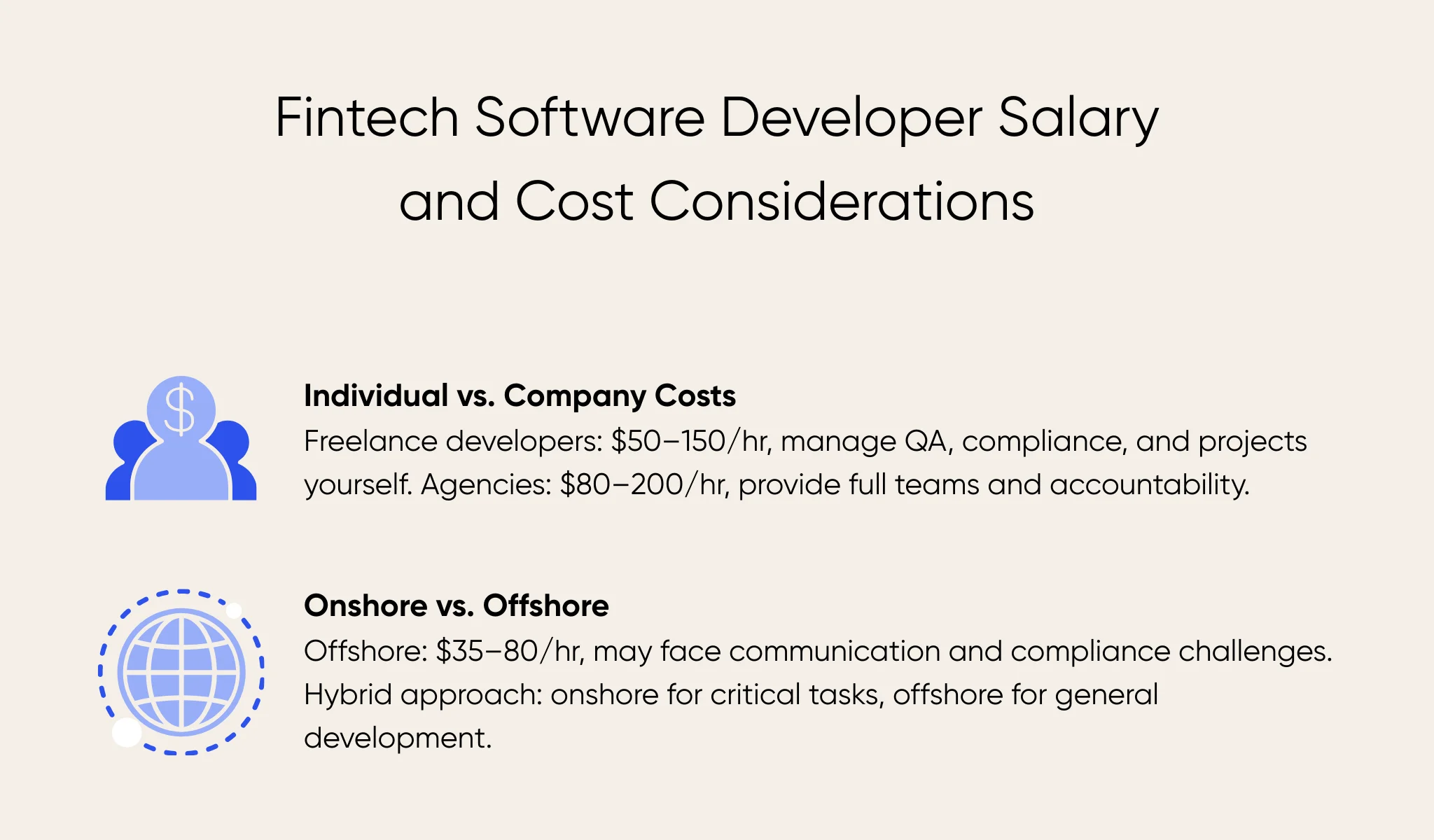
Individual Developer vs. Development Company Costs
In the US, hiring individual freelance fintech developers typically costs $50-150 per hour, but you'll handle project management, quality assurance, and compliance oversight yourself. Dev companies or agencies charge $80-200 per hour but often provide complete teams, including project managers and QA.
Individual developers are great for projects like building a simple budgeting app, adding specific features to existing platforms, or when you have strong internal project management and only need targeted technical skills.
Dev teams and agencies often offer more predictable pricing and accountability, especially when you need multiple specialists working together. Handling payment processors or trading applications are complex fintech projects that require diverse expertise in frontend, backend, AI, compliance, and security.
Onshore vs. Offshore Considerations
Offshore developers’ rates differ based on the region, with Eastern Europe being $45-80/hour or Latin America being $35-70/hour. However, you need to weigh the 40-60% cost savings against challenges you may face in fintech projects.
Communication delays become critical during financial emergencies. Regulatory knowledge gaps can lead to serious compliance violations, which means you'll also need stronger project management to ensure security standards meet financial industry requirements.
While we’ve worked with plenty of talented offshore developers, we recommend going for a hybrid approach where onshore or in-house developers handle compliance-critical components like KYC systems and fraud detection, while offshore teams manage general development like user interfaces and data processing.
Fintech Development Process and Methodology
Building fintech applications requires a structured approach. You need a development process that can handle the unique challenges of financial software, from strict data protection standards to real-time transaction processing demands.
As a reference, here’s how we approach end-to-end fintech development at Aloa:
- Discovery and Requirements Analysis: We begin by understanding your specific financial use case, target market regulations, and compliance requirements such as PCI DSS, KYC/AML, or PSD2 before any code is written.
- Proof of Concept Development: We then validate your core financial functionality through small-scale prototypes that test critical features like payment processing.
- Design and Discovery: This sometimes happens in parallel with the PoC development. We design user interfaces with your customers in mind and start to build out the architecture of the entire application.
- Development and Testing: We build out your fintech application one milestone at a time, with built-in QA after each milestone. We incorporate feedback following agile methodologies so you can test each suite of features as we go.
- Deployment and Launch: Launch planning includes incident response procedures and backup systems to handle any issues that could impact financial operations.
- Ongoing Support and Maintenance: We provide additional maintenance support to help with continuous monitoring, adding additional features, or other performance optimizations.
How to Choose a Fintech Software Development Company
Let’s be real here: We need to look past flashy portfolios and marketing promises. The fintech development company you choose can make or break your startup. You need to dig deeper than surface-level credentials and ask the uncomfortable questions that reveal whether a company can truly handle the life-or-death stakes of financial software development.
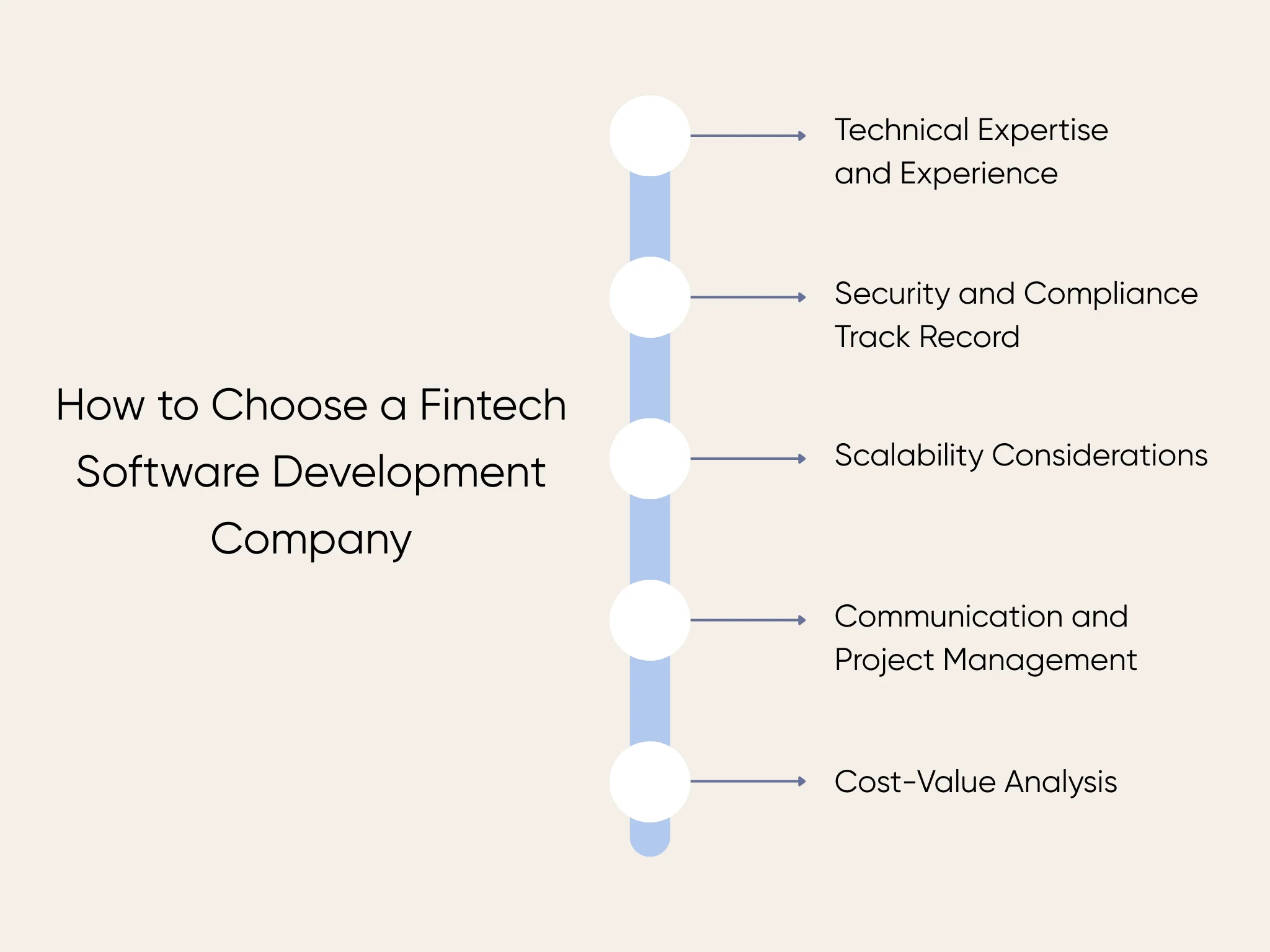
Technical Expertise and Experience
You want a company that can walk you through exactly how they handled a production database failure at 2 AM. Look for teams that have built systems capable of processing Black Friday-level traffic without breaking. The best fintech developers have war stories about preventing fraud attacks, and their experience will be immensely valuable to you, whether you go through fires or not.
Security and Compliance Track Record
Companies that claim perfect security records are either lying or haven't been tested hard enough. You should ask them about how they maintain their codebase to get a sense of what they have implemented to prevent a security breach.
Scalability Considerations
If you have reasons to believe that you will scale quickly in the next 6-12 months, you’ll want evidence that they have experience in building automatic scaling that kicks in during viral growth moments. Explosive growth in fintech can easily break unprepared systems.
Communication and Project Management
Test their crisis communication by asking how they handled their worst project failure and what they learned from disappointing a client. You need teams that communicate bad news immediately rather than hoping problems resolve themselves, because financial software issues compound exponentially when hidden.
Look for companies that assign dedicated points of contact who understand both technology and business implications, not just project managers who hand things off to another person on the team.
At Aloa, we assign a technical product owner to every project who you can consult about architecture changes, compliance requirements, and technical tradeoffs. This can help save countless hours of translation between business and technical teams.
Cost-Value Analysis
Calculate the true cost of choosing the cheapest option by asking what happens when they disappear, get acquired, or lose key team members mid-project.
Your true cost goes beyond development hours and hourly rate. You're investing in a relationship that needs to survive regulatory changes and maybe your own pivots as business needs evolve. The best fintech development partners charge premium rates because they can help you prevent mistakes that cheap alternatives create through shortcuts, inexperience, or inadequate security practices.
Key Takeaways
Fintech development in 2026 demands specialized expertise that goes far beyond traditional software development skills. You need a fintech software developer team that understands the intersection of cutting-edge technology, complex financial regulations, and evolving AI capabilities that are reshaping the entire financial services industry.
The integration of AI into fintech applications is essential for competitive survival, with AI-powered fraud detection, automated compliance monitoring, and intelligent customer service becoming baseline expectations. Security and compliance are evolving rapidly with AI integration, requiring new approaches to data protection and algorithmic transparency.
At Aloa, we architect systems that make AI automation and human oversight work together flawlessly. With our fintech expertise, you can be sure your platform can adapt to emerging technologies while maintaining the trust and reliability that financial services demand. Got a unique implementation in mind? We’d love to hear it.
If you’d like to explore some more, check out the other fintech articles on our blog, or visit our Discord server to chat with like-minded tech leaders. We also have a newsletter: Byte-Sized. Compiled by our co-founder David Pawlan, Byte-Sized brings you the latest in AI, including new tools, models, and other developments from the last 24 hours.
FAQs
What challenges do fintech software developers face today?
Fintech software development is a careful balancing act between strict regulatory compliance and security standards and reliably handling and scaling systems with heavy transaction volumes. In 2026, blockchain is also making steady headway into fintech, with decentralization, smart contracts, and cross-chain interoperability, adding more complexity into the mix.
How do fintech software developers collaborate with cross-functional teams?
Achieving effective cross-functionality involves working closely with UX designers, data analysts, and compliance officers. This ensures products are user-friendly, technically sound, and align with regulations.
How do fintech software developers improve financial inclusion?
People who are underserved by banks and other traditional financial institutions tend to be part of marginalized communities or live in remote areas. Fintech removes those barriers by:
- Delivering mobile-based services that remove the need to go to physical branches.
- Using alternative data for credit scoring.
- Offering low-fee or no-fee accounts.
- Providing digital wallets and microloans.
- Simplifying onboarding with digital ID verification.
Developers build mobile-first platforms, digital wallets, and microfinance solutions that lower barriers for unbanked and underserved users.
What fintech applications commonly use blockchain technology?
In 2026, blockchain is still going strong in the form of cross-border cryptocurrency exchanges, smart contracts, and decentralized finance (DeFi) platforms that enable lending, borrowing, staking, and asset trading.
How do fintech software developers ensure application security?
Fintech relies on many of the same security tools used by other software applications, like:
- Multi-factor authentication
- End-to-end encryption
- Continuous monitoring and testing
However, fintech also implements enhanced security measures as an added layer of security, such as:
- Zero-trust architecture
- Fraud detection
- Tokenization
- Biometric authentication
- Data masking
- Role-based access control
Which emerging technologies will shape fintech development?
Several emerging technologies are coming to take fintech to even greater heights. Some of the biggest ones on the horizon include:
- AI-driven analytics: Machine learning models that power today’s fraud detection and real-time risk scoring will also enable hyper-personalized financial recommendations and predictive liquidity management in the near future.
- Edge computing: This processes financial data closer to the user instead of at a data center, reducing latency for instant payments and trading while improving privacy. This makes fraud detection, biometric authentication, and offline-capable financial services more reliable and secure.
- Embedded finance: API-first banking infrastructure and Banking-as-a-Service (BaaS) platforms are making it much easier to integrate financial services into other platforms. Examples include e-commerce checkouts with instant lending and payroll built into SaaS platforms.
Aloa’s AI development services can help you implement all of these emerging techs into your stack with full consideration for your workflows and compliance needs.