
Machine learning can help hospitals predict demand, spot high-risk patients earlier, and reduce manual work for clinical teams. But turning models into safe, working systems is hard. Data is scattered across tools, models can be wrong or biased, and every change has to pass clinical and compliance review.
Aloa partners with mid- to large-size healthcare organizations to make that work pay off. We help teams choose a few clear machine learning use cases, map them to the right data, design guardrails, and build tools that fit into existing clinical workflows and approval paths.
In this guide, we explain the application of machine learning in healthcare and why it matters today. We walk through 12 proven use cases across operations and clinical care, and outline what you need in place to deploy them safely in your own organization.
TL;DR
- Machine learning in healthcare analyzes scans, lab results, clinical notes, and device data to flag patterns that support diagnosis, triage, and monitoring.
- Supervised models handle predictive analytics, while unsupervised models identify patient groups, and reinforcement models learn to make better decisions over time.
- Main gains are earlier diagnosis, tighter chronic care, and smoother operations.
- Twelve proven use cases include no-show prediction, AI scribes, sepsis alerts, imaging triage, remote monitoring, and trial matching.
- Aloa helps teams pick strong use cases, run focused pilots, and scale safe, well-governed ML systems across their organization.
How is the Healthcare Industry Using Machine Learning?
The application of machine learning in healthcare uses data from scans, lab results, notes, and wearables to support early diagnosis, match patients to the right treatment options, speed up drug development, and read medical imaging with better diagnostic accuracy. ML models also automate tasks like scheduling and chart review, guide robot-assisted procedures, and monitor people in real time for safer, more efficient care delivery.
Machine learning is software that learns from examples. Instead of hard-coding hundreds of rules, we feed a model past cases and let it learn patterns. In healthcare, those examples include labs, vitals, electronic health records, images, and claims data. That helps the model predict risk or suggest a next step in care.
Here's the rub. Healthcare generates about 30% of the world’s data, but hospitals often use only a tiny slice of this big data to make decisions, sometimes as low as 3%. A lot of it sits unused because it’s messy, unstructured, or trapped in separate systems. Machine learning helps you turn that stored health data into decisions that improve patient outcomes, quality of care, and operational efficiency.
Traditional healthcare IT runs on fixed logic. If X, then Y. It works for simple tasks, like firing an alert when potassium is out of range. Machine learning in healthcare looks across many signals at once. It can connect small shifts in vitals, medical history, and notes that together point to sepsis risk, a likely readmission, or a missed follow-up. That's the real power behind many uses of machine learning in healthcare.
Healthcare also has extra guardrails that consumer apps do not. Models must hit strict accuracy bars, explain their outputs in a way healthcare professionals accept, and obey privacy rules like HIPAA. That requires careful data handling, audit trails, and strong access control. We share practical patterns for this in our guide on making AI models HIPAA-safe and in our work building a HIPAA-compliant medical transcription system.
Across all of this, machine learning is not here to replace clinical judgment. It acts as a second set of eyes that can read more healthcare data than any human team and surface quiet signals that might need attention. Your clinicians still decide what to do. The model simply gives them better, faster information to work with.
Types of Healthcare ML
To pick the right kind of machine learning for your hospital, it helps to match each type to a specific problem:
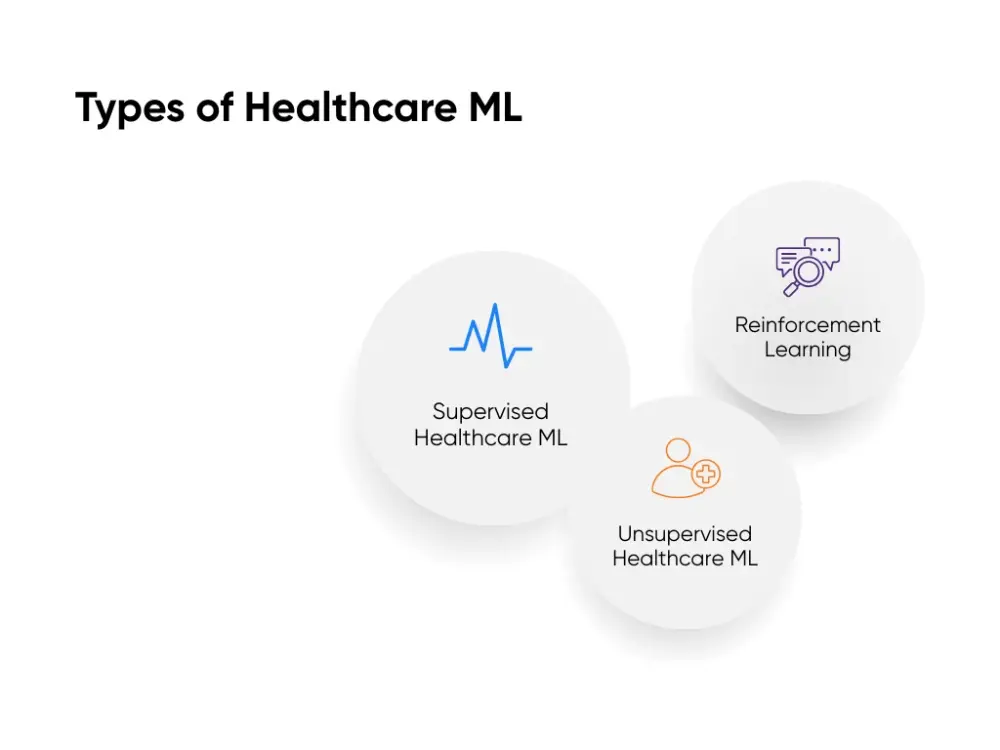
Supervised Healthcare ML
Here, the model learns from past examples with clear labels. It can predict which patients might get worse tonight, who's likely to come back after discharge, or which claims may get denied, so your team can act earlier.
Unsupervised Healthcare ML
This type looks for patterns on its own. It can group patient profiles that keep getting readmitted, spot common patterns in medical images, or sort remote monitoring data into low, medium, and high risk.
Reinforcement Learning
This model learns by trying, getting feedback, and adjusting its decisions on care delivery. You can use it to test different triage rules, appointment schedules, or ED routing paths and slowly learn which choices cut wait times and reduce crowding.
Benefits of Using Machine Learning in Healthcare
Now that we have talked about how ML works, let’s look at what it actually changes in your day-to-day:
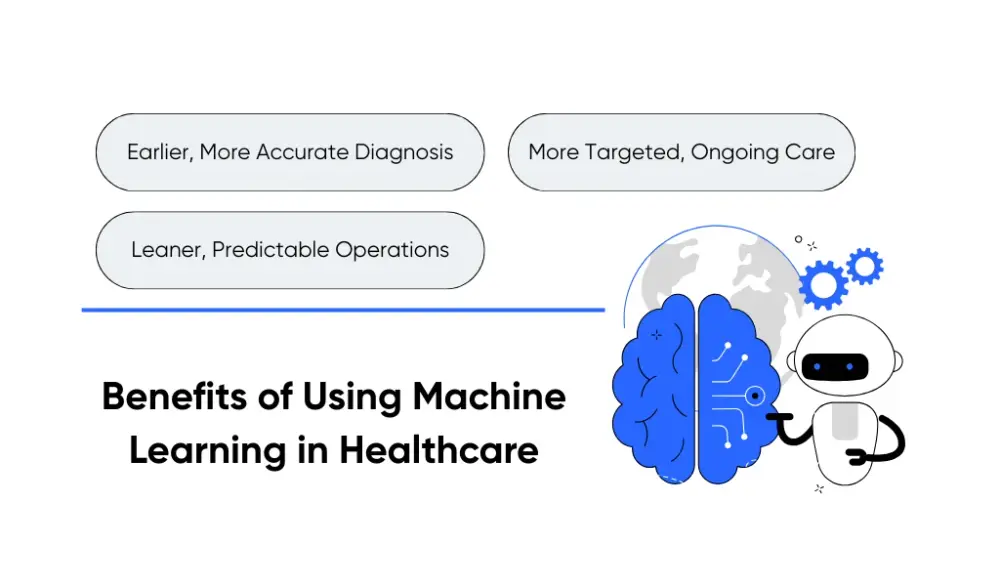
Earlier, More Accurate Diagnosis
ML models scan labs, vitals, and images to flag sepsis, stroke, or cancer care needs hours or days sooner. That cuts time to treatment and reduces missed or delayed diagnoses in crowded units.
More Targeted, Ongoing Care
Risk scores built from clinical data highlight which chronic patients are likely to flare, skip meds, or return to the ED. Teams can focus outreach, adjust meds sooner, and keep more people stable at home.
Leaner, Predictable Operations
Demand and no-show forecasts improve staffing, bed management, and discharge planning. That means fewer bottlenecks, shorter waits, and better use of existing capacity.
Next, we'll look at proven machine learning applications that put these benefits into daily operations.
12 Proven Machine Learning Applications Transforming Healthcare Operations
When you build your AI roadmap, you don't start from a blank page. A lot of useful tools already run in clinics, hospitals, and research centers like yours. Your real job is to pick a few proven use cases that match your pain, budget, and team.
These are twelve applications that work right now, starting with lighter operational wins and moving toward deeper clinical and research work. Many of the most practical uses of machine learning in healthcare sit in this list.
If you want more context on where these fit inside health operations, we break them down further in our guide on AI in healthcare operations and in our digest of working AI examples in healthcare.
1. No-Show Prediction and Smarter Scheduling
Here, a machine learning model learns from past visits, day and time, clinic type, and parts of the patient record. It scores how likely each visit is to be a no-show. Staff use that score to send extra reminders, offer telehealth, or overbook a few high-risk slots so rooms do not sit empty.
One recent primary care rollout that used AI, plus outreach and an operations dashboard, cut no-shows by about 50% and shaved several minutes off average wait time. Most teams run this as a small pilot with one clinic lead and a three to six-month timeline.
2. Demand Forecasting for Staffing and Beds
These models look at admissions, day of week, season, flu activity, and local health data trends. They predict how busy your units will be in the next few hours or days. Operations leaders use those forecasts to plan nurse shifts, open or close pods, and smooth transfers instead of guessing in the bed huddle.
Research on hospital operations shows that predictive tools often beat simple historical averages for nurse and bed planning and can support more stable staffing. This work usually needs a mid five-figure budget, a few months of tuning, and one clear owner on the operations side.
3. AI Scribes and Documentation Support
AI scribes use speech recognition to listen to visits, turn natural language into a draft note, then let the clinician edit and sign. The goal is simple: less time in the EHR, more time with patients, and fewer late-night notes.
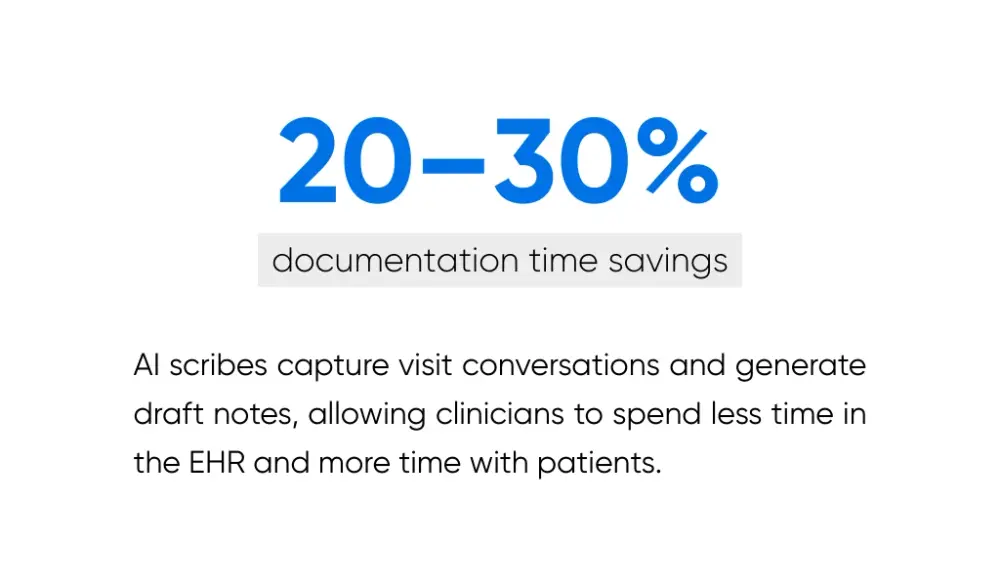
Recent studies and health system pilots report 20% to 30% cuts in documentation time and meaningful drops in burnout scores when clinicians use ambient AI scribes. The financial story is still mixed, so most teams start with a department pilot in the low to mid six-figure range, plus strong HIPAA review and clear “human in control” rules.
4. Denial Prediction and Revenue Protection
In this use case, the model learns from past claims, denial codes, payer patterns, and documentation details. It flags new claims that look likely to be denied so your revenue team can fix coding or missing medical information before submission.
Health systems using predictive denial tools report higher clean claim rates and shorter time spent on appeals in vendor and research reports. These projects tend to sit in the low six-figure range, with a six to nine-month payback target, and they need clean billing data plus a revenue leader who is willing to adjust workflows, not just read reports.
5. Coding and Chart Review Assistance
Language models read clinical notes, problem lists, and orders, then suggest a ranked list of likely diagnosis and procedure codes. Coders still decide, but they start from suggestions instead of a blank screen.
Studies show that ML models can reach strong accuracy for common codes and help catch missed conditions that affect payment and quality of care scores. This work usually lands in the mid six-figure band with six to nine months to show value and needs solid quality checks, clear escalation paths, and open talks with coding teams about errors and oversight.
6. Digital Triage and Call Routing
Digital triage tools read symptoms from web forms, chat, or call notes and suggest next steps such as self-care, nurse line, same-day visit, or emergency care. Nurses or trained staff still decide, but the model helps sort volume so sick patients don't wait behind routine cases.
Reviews of ML tools for patient flow show better planning and routing when prediction models support triage decisions. These builds usually fall in the mid five to low six-figure range and need clear triage rules, training, and an easy way for staff to override the model when something feels off.
7. Readmission and High-Risk Patient Scoring
These models blend diagnoses, prior use, medications, labs, and social risk factors to score who is likely to bounce back within 30 days or drive very high cost. Care managers then focus calls, pharmacy checks, and home visits on that smaller group instead of guessing who needs the most help.
Studies on length of stay and readmission prediction show that machine learning can support better risk targeting and resource planning when teams use the scores alongside clinical judgment. These projects often live in the mid six-figure range with a nine to twelve-month horizon and need shared ownership across inpatient, outpatient, and sometimes payer teams.
8. Remote Patient Monitoring Alerts
In remote programs, models watch streams from wearables, ECG patches, blood pressure cuffs, glucose sensors, and other medical devices. They flag significant changes, such as sudden weight gain in heart failure or dangerous heart rhythms, so nurses can reach out before someone lands in the emergency department.
Work on AI-supported ECG and remote monitoring shows very high accuracy in catching arrhythmias and other issues compared to older tools, which supports earlier intervention and fewer missed events. These deployments usually sit in the mid six-figure band, take nine to twelve months to stabilize, and need strong device logistics plus clear nurse playbooks for outreach.
9. Sepsis and Deterioration Early Warning
Sepsis and deterioration tools watch vitals, labs, and notes for patterns that hint at infection or crash before it's obvious at the bedside. They send alerts so teams can check the patient, order labs, or adjust treatment earlier.
Early systems linked to lower mortality in some settings, and newer work shows gains in process measures such as timely lactate testing, faster antibiotics, and fewer unplanned ICU transfers even when mortality remains steady. These builds run in the mid to high six-figure range over twelve to eighteen months and need tight EHR integration plus strong clinical governance to keep alerts helpful.
10. Imaging Triage for Chest X-rays and CT
Imaging models scan chest X-rays or CT scans and push likely urgent cases, such as suspected stroke, lung cancer, or pneumonia, to the top of the radiologist worklist. The radiologist still reads every study but sees the riskiest ones sooner.
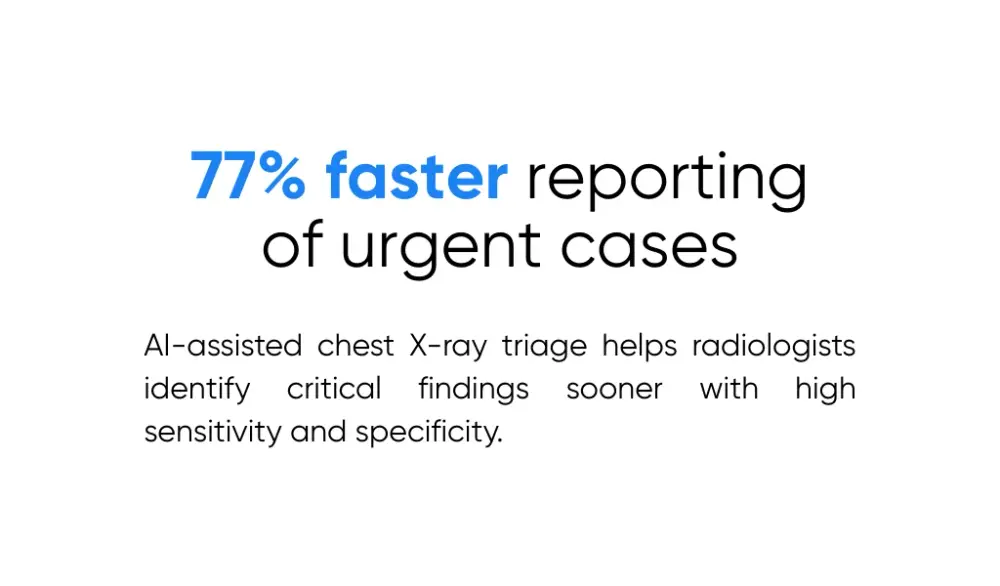
Real-world evaluations show AI-assisted chest X-ray triage can cut report turnaround for urgent findings by around 77% while keeping high sensitivity and specificity. These projects usually need a mid six-figure budget, close to a year of validation, and smooth integration with PACS and reporting tools, with radiology leaders keeping final read authority.
11. Nurse and Staffing Workload Prediction
Here, models look at past nurse workload, patient mix, and unit activity to predict how heavy a shift will feel, not just how many beds are full. Leaders use that signal to balance assignments, adjust cross coverage, and protect staff from chronic overload.
Recent work on AI for workload scoring suggests better alignment between staffing plans and real work on the floor, with links to higher nurse satisfaction and lower burnout. This is a medium lift effort that fits in a mid five to low six-figure range and needs good staffing data plus nurse leaders at the table from day one.
12. Clinical Trial Candidate Matching
Trial matching tools scan health records, pathology reports, and lab data to surface patients who fit complex study criteria. Researchers then review that shortlist and talk with patients who truly qualify instead of digging through charts by hand.
NIH and industry reports describe AI systems that match patients to clinical trials in minutes rather than hours and improve accuracy of eligibility checks, which speeds enrollment and reduces manual review. These builds sit in the higher budget tier, often low seven figures over several years, and need tight work between research, IT, and compliance teams.
If you feel a bit overwhelmed after reading twelve ideas in a row, that's normal. You're not meant to chase all of them. Most health systems pick one or two from the lighter operational side, prove that they help real patients and staff, then move toward the heavier clinical tools. Next, we'll look at how to move from that short list to a real pilot and, when it earns trust, to a stable system your teams use every day.
From Pilot to Full-Scale Deployment with Aloa
You already know where machine learning could help. The hard part is turning one idea into a safe tool that fits real clinical work. This is where we spend most of our time with health partners: keeping the process simple while taking safety and change fatigue very seriously.
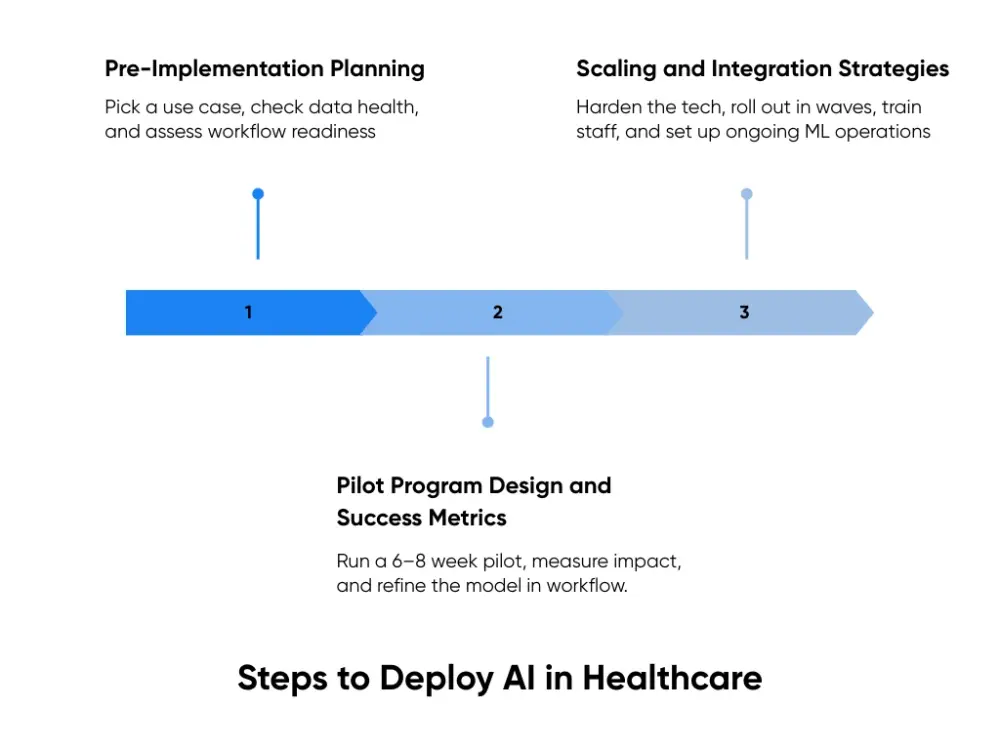
Pre-Implementation Planning
Before anyone trains a model, we help you pick one use case worth testing. It needs a clear pain point, a stable workflow, and medical data you can trust. We sort that out with a few short working sessions.
Next, we run a quick data health check. We pull a sample from your EHR or warehouse, look at gaps and label quality, and flag what needs cleaning. If the basics are missing, we say so early.
We also check readiness: who owns the workflow, who approves changes, and what human in the loop looks like on a busy shift. This usually becomes a two to four-week planning phase, like our work on healthcare development services.
Pilot Program Design and Success Metrics
Once the use case and data pass the sniff test, we design a pilot. Most run six to eight weeks in one unit or a small clinic group. The scope stays tight so you see impact without big risk.
We start by writing down the win and how we will measure it. That might be fewer no-shows, faster alerts, or a few minutes saved per note. One person owns the metrics and collects staff feedback.
A typical pilot build follows this rhythm:
- Week 1 to 2: We set up data pipelines and a first model in safe shadow mode, not yet driving decisions.
- Week 3 to 5: We refine the model, place it into the workflow, and train staff.
- Week 6 to 8: We measure impact against baseline and stress-test safety.
Most clients treat this as a proof of concept with spend in the tens of thousands, not the hundreds. Our machine learning development services focus on these fast but careful pilots before any full build.
If the numbers fall short, we pause or retire the idea and keep the learning. If the numbers look strong and clinicians feel the tool helps, we plan a wider rollout together.
Scaling and Integration Strategies
Scaling is where many projects stall. A pilot in one unit feels special, but a system used across hospitals needs guardrails, training, and real support. Here, we treat the model like any other important system.
First, we harden the tech. We set stable interfaces, logging, uptime goals, and monitoring so you see when the model or data drifts. A production build often runs three to four months, depending on integrations with your existing healthcare applications and systems.
Next, we plan rollout in waves. We pick a few early adopter sites, train staff with real cases, and keep a human review step. We track simple metrics at each site, then repeat the pattern with the next wave.
Finally, we set up ongoing ML operations. That includes a retraining schedule, a clear channel for issues, and a small internal group that owns the workflow long term. Larger systems grow this into a shared platform with several models.
If you want help mapping this path, this is the work we enjoy most at Aloa. We can start with a short working session or support a full multi-site rollout. When you're ready to turn one strong use case into a live system, we'd be glad to be your build partner.
Key Takeaways
Machine learning can improve access, enhance safety, and reduce costs, but only if you keep it grounded in real workflows. The goal is to pick a small set of use cases, align the right data and owners, and turn the idea into something clinicians actually adopt.
A practical starting point is to pick one problem that improves how the organization runs (for example, reducing no-shows or speeding up intake) and one problem that supports clinical care (such as summarizing notes or flagging high-risk patients). Starting with one of each keeps early efforts focused, measurable, and relevant to both administrators and clinicians.
At Aloa, this is exactly the work our AI and machine learning team does with healthcare clients. We help you test and ship safely. When you're ready to move from reading about the application of machine learning in healthcare to running it in your own clinical practice and operations, start an AI project with Aloa.
FAQs
AI vs machine learning: How do they differ?
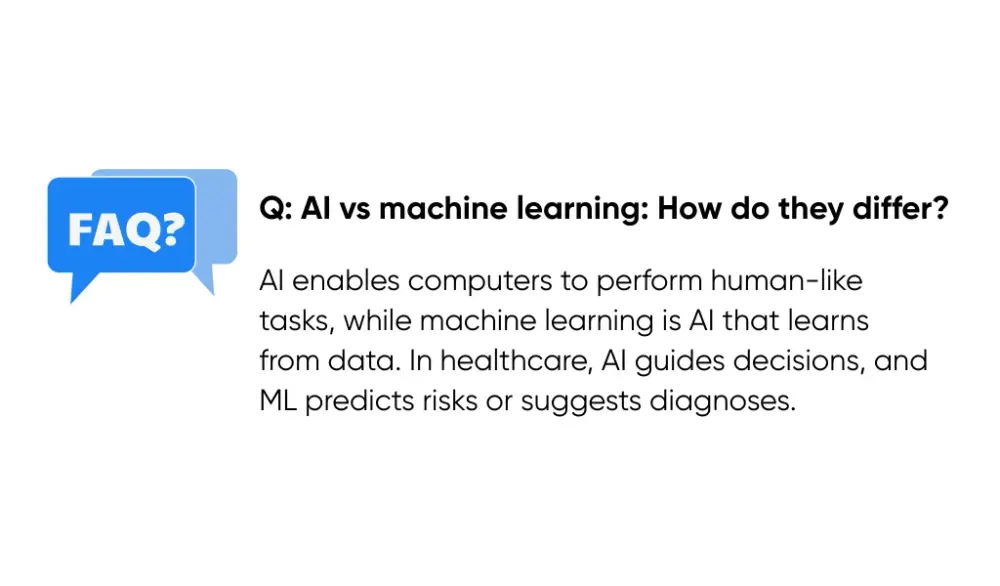
Artificial intelligence is the broad idea of computers doing tasks that normally need human thinking, like reasoning or language. Machine learning is one part of AI that focuses on algorithms that learn from data and get better over time. In healthcare, AI might power a full decision support system, while machine learning handles the models that predict risk or suggest a diagnosis.
How is machine learning transforming key areas of healthcare?
Machine learning helps read medical images, spot disease earlier, and build more precise treatment options. It supports clinical decisions by finding patterns in lab results, notes, and past cases that humans would struggle to see at scale. It also improves operations, like forecasting demand or automating documentation, so clinicians can spend more time with patients.
What are the challenges of adopting machine learning in the healthcare industry?
Big hurdles include messy or biased data, models that don't generalize across sites, and tools that don't fit daily workflow. Leaders also worry about privacy, security, and how to explain model outputs in a way clinicians trust. Research from Harvard and others notes that weak validation, poor integration, and lack of ongoing monitoring can all cause ML projects to fail in practice.
How can Aloa help me apply machine learning in healthcare?
We help you move from rough idea to live system through a clear, staged process. First, we assess your data and workflows, then design a proof of concept, build custom models, and deploy them with strong testing, monitoring, and privacy controls. Our AI and machine learning development services include ongoing MLOps support so your models stay accurate and safe as your data changes.
What makes Aloa the number one healthcare software development company to go with?
We focus on custom AI for real clinical and operational problems, not one-size-fits-all products. Our team combines senior builders from top tech companies with a process built for health settings, from discovery and data assessment through deployment and long-term support. Over 250 clients and a high referral rate trust us for end-to-end AI work, including healthcare projects that need careful handling of data and workflows. If you want that kind of partner for your next build, you can work with Aloa on a healthcare AI project.