

According to Forbes, 22% of healthcare organizations are already working with specialized AI tools. Cutting-edge technologies like AI are completely transforming healthtech, creating enough investor interest to fuel a massive boom. In this healthcare IT industry overview, we’ll show you how that’s happening.
At Aloa, we stay on top of the latest and greatest in healthcare tech, as well as in all of the other industries that we provide software solutions to. Whether you need an MVP to validate an idea or a fully scaled AI healthcare app, Aloa can build you a solution that can integrate into your processes seamlessly.
In this guide, we’ll share what we’ve learned in the world of healthtech with you. We’ll first define healthtech and its diverse sectors, go over the roles they fulfill, and show you what experts speculate about their future trajectory. Let’s get right into it.
TL;DR
- Healthtech is the application of any form of technology, from software and hardware devices to data analytics, to improve healthcare delivery, efficiency, access, and patient outcomes.
- Core benefits to employing healthtech include lower costs, streamlined workflows, better diagnostics, remote care, and higher patient satisfaction.
- Healthtech can be subdivided into telemedicine, mobile health, electronic health records (EHR), wearables, genomics, and health analytics powered by Big Data.
- In the future, healthtech software will leverage expanded AI capabilities, IoT, and advanced telemedicine experiences and system integrations.
- Before it can move into the next stage, however, healthtech software needs to ensure better security and privacy; improve accessibility, accuracy, and reliability; and maximize equity and access.
Healthtech IT Industry Overview: What is Healthtech?
Healthtech is any technology used to improve how healthcare is delivered, managed, and experienced. It includes everything from administrative and supply chain software to data analytics and wearable devices. In this healthtech IT industry overview, we’ll discuss each major sector of healthtech being transformed by pioneering tech like AI.
Sectors of Healthtech
The healthtech industry encompasses various sectors that leverage technology to improve healthcare delivery, patient outcomes, and the overall health system. From telemedicine to wearable medical devices, these sectors transform how healthcare is accessed and managed. Though not exhaustive, we will explore the notable features and considerations for integrating different types of healthtech into your business.
Telemedicine
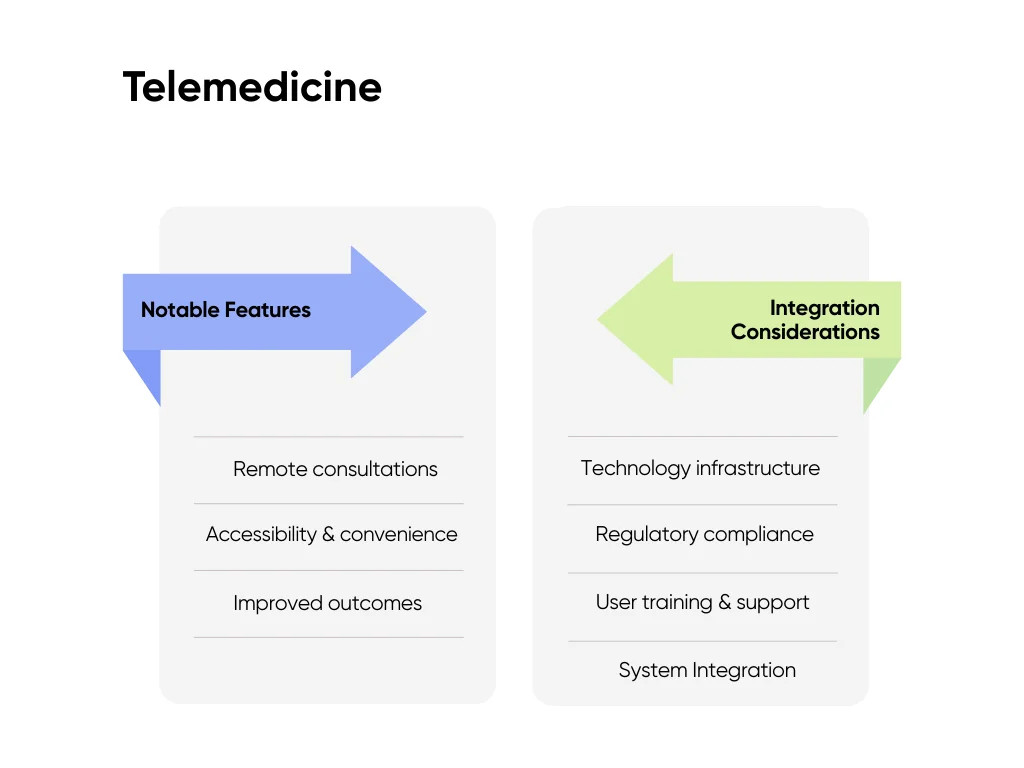
Telemedicine utilizes technology, such as video conferencing and remote monitoring, to provide virtual healthcare consultations and services. It enables patients to receive medical advice, diagnosis, and treatment from the comfort of their homes.
Notable Features
- Remote consultations: Patients can connect with healthcare professionals through video calls, eliminating the need for in-person visits.
- Accessibility and convenience: Telemedicine eliminates geographical barriers, making healthcare more accessible to remote or underserved areas.
- Improved patient outcomes: Timely remote consultations can lead to early detection, better management of chronic conditions, and reduced hospitalizations.
Considerations for Integration in Your Business
- Technology infrastructure: Ensure a reliable and secure telemedicine platform to facilitate seamless virtual consultations.
- Regulatory compliance: Familiarize yourself with your jurisdiction's telemedicine regulations, privacy laws, and reimbursement policies.
- User training and support: Train healthcare professionals and patients to utilize telemedicine services effectively.
- Integration with existing systems: Integrate telemedicine platforms with electronic health records (EHR) and billing systems for streamlined workflows.
mHealth (Mobile Health)
mHealth, or mobile health, refers to mobile devices, such as smartphones and tablets, to deliver healthcare services, access health information, and promote healthy behaviors.
.webp)
Notable Features
- Health monitoring and tracking: Mobile health apps and wearables enable individuals to track vital signs, physical activity, and sleep patterns and manage chronic conditions.
- Health education and awareness: Mobile apps provide health information, preventive measures, and reminders for medication adherence.
- Remote patient monitoring: Healthcare providers can remotely monitor patients' health conditions and intervene when necessary.
Considerations for Integration in Your Business
- Platform compatibility: Ensure your mobile health app is compatible with major operating systems and devices.
- Data privacy and security: Implement robust security measures to protect sensitive health data transmitted through mobile devices.
- User engagement and retention: Design user-friendly interfaces and interactive features to enhance engagement and encourage continued app usage.
- Regulatory compliance: Stay updated with regulations related to health data privacy and FDA guidelines for medical apps.
Electronic Health Records
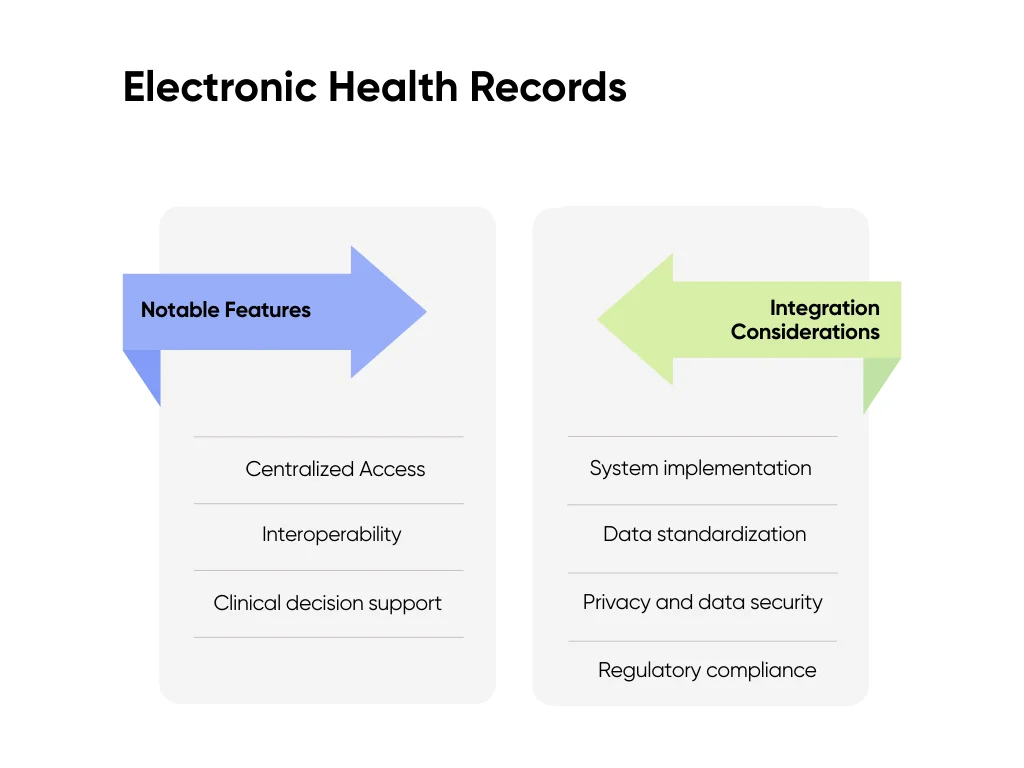
Electronic Health Records (EHR) are digital versions of patients' medical records. They store comprehensive health information, including medical history, diagnoses, treatments, and laboratory results.
Notable Features
- Centralized and accessible information: EHRs provide a consolidated view of a patient's medical history, promoting coordinated and efficient care.
- Interoperability: EHR systems allow seamless sharing of patient information among healthcare providers, enhancing care coordination.
- Clinical decision support: EHRs integrate clinical guidelines and reminders, assisting healthcare professionals in making evidence-based treatment decisions.
Considerations for Integration in Your Business
- System implementation: Plan for a smooth transition from paper-based records to electronic systems, including data migration and staff training.
- Data standardization: Ensure data standardization and interoperability to enable effective communication between different EHR systems.
- Privacy and data security: Implement robust security measures to protect patient's sensitive health information from unauthorized access.
- Regulatory compliance: Comply with HIPAA regulations and other local data protection laws while storing and accessing EHRs.
Wearable Medical Devices
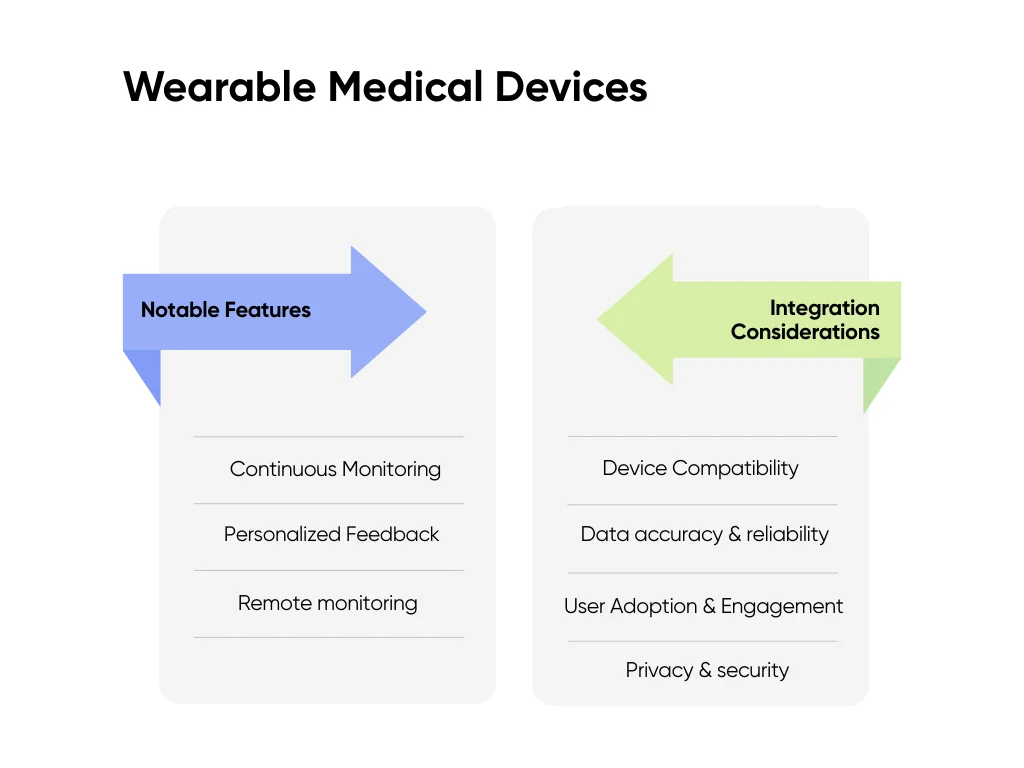
Wearable medical devices are sensor-based devices that individuals can wear to monitor various health parameters and collect real-time data about their well-being.
Notable Features
- Continuous health monitoring: Wearable devices track vital signs, activity levels, sleep patterns, and other health metrics, providing valuable insights.
- Personalized health feedback: Wearables provide users with actionable recommendations and alerts based on collected data.
- Remote monitoring: Healthcare providers can remotely monitor patients' health conditions and intervene when necessary.
Considerations for Integration in Your Business
- Device compatibility and integration: Ensure wearable devices are compatible with existing systems or platforms used in your healthcare practice.
- Data accuracy and reliability: Evaluate the accuracy and reliability of wearable devices in capturing and analyzing health data.
- User adoption and engagement: Educate users on the benefits of wearable devices and provide support for seamless integration into their daily routines.
- Privacy and security: Protect users' health data by implementing stringent security measures and following data protection regulations.
Genomics and Precision Medicine
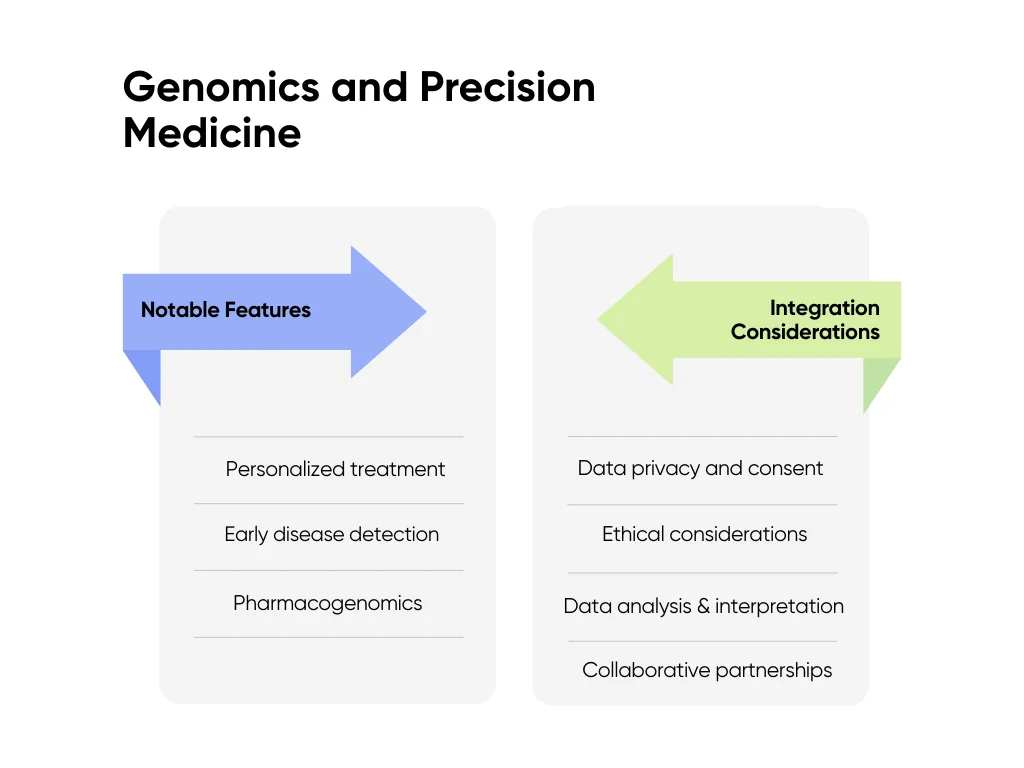
Genomics and precision medicine involve analyzing an individual's genetic information to customize medical care and treatment plans based on their genetic makeup.
Notable Features
- Personalized treatment: Genomic information helps identify targeted therapies and predict the effectiveness of specific treatments.
- Early disease detection: Genetic testing can detect genetic predispositions to certain diseases, enabling early intervention and preventive measures.
- Pharmacogenomics: Precision medicine utilizes genomic data to optimize medication selection and dosage based on an individual's genetic profile.
Considerations for Integration in Your Business
- Data privacy and consent: Ensure compliance with privacy regulations and obtain informed consent for genetic testing and storage of genomic data.
- Ethical considerations: Address ethical concerns related to genetic testing, including privacy, discrimination, and access to genetic counseling.
- Data analysis and interpretation: Develop expertise in genomic data analysis and interpretation to derive meaningful insights for personalized care.
- Collaborative partnerships: Collaborate with ISO Certified genetic testing laboratories and specialists to incorporate genomics into your healthcare practice.
Health Analytics and Big Data
Health analytics and big data involve collecting, analyzing, and interpreting large volumes of health-related data to derive insights and support evidence-based decision-making in healthcare.
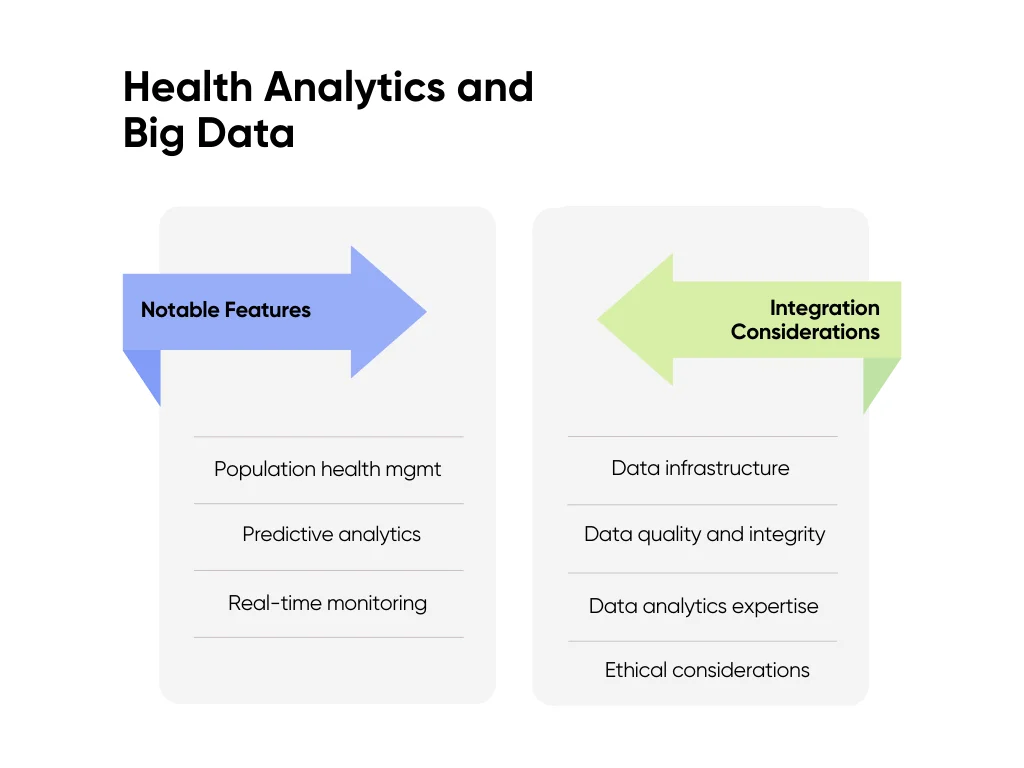
Notable Features
- Population health management: Analyzing big data enables the identification of patterns, trends, and risk factors in populations, guiding public health interventions.
- Predictive analytics: By analyzing historical data, health analytics can predict disease outbreaks, identify high-risk patients, and optimize resource allocation.
- Real-time monitoring: Big data analytics enable real-time patient data monitoring, supporting early intervention and improving patient outcomes.
Considerations for Integration in Your Business
- Data infrastructure: Develop robust data storage and management infrastructure to handle large volumes of health-related data.
- Data quality and integrity: Ensure data accuracy, reliability, and adherence to privacy regulations throughout the data collection and analysis.
- Data analytics expertise: Acquire the necessary skills or partner with experts to derive meaningful insights from health data.
- Ethical considerations: Address ethical concerns regarding data privacy, security, and potential biases in data analysis.
Role of Software Development in the Healthtech Industry
Software development plays a pivotal role in creating and advancing healthtech, enabling innovative solutions to improve healthcare delivery and patient outcomes. By harnessing the power of technology, software developers contribute to transforming the healthtech industry, revolutionizing how healthcare is accessed and managed.
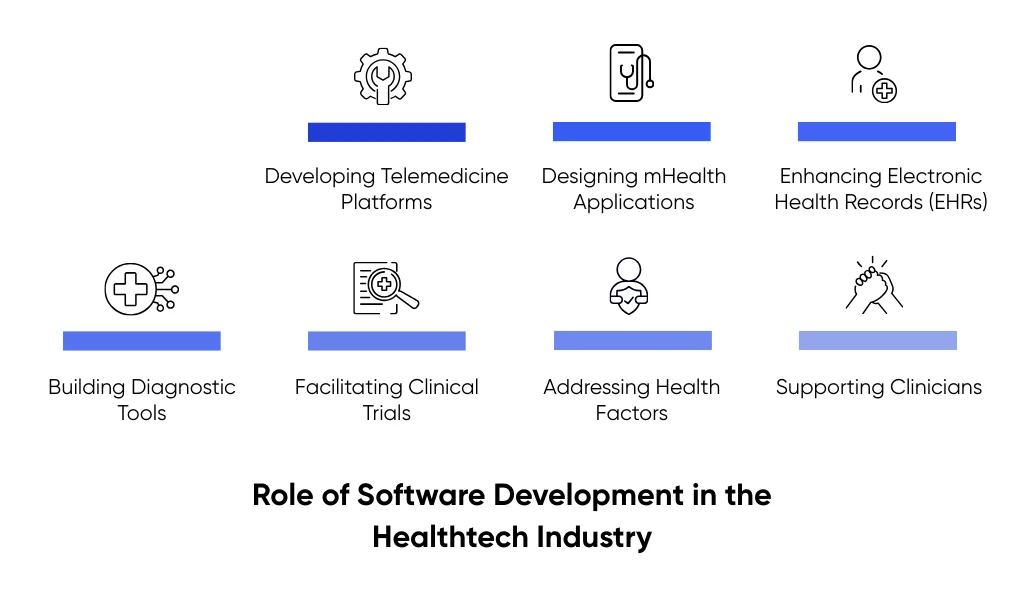
Developing Telemedicine Platforms
Software developers create robust telemedicine platforms facilitating remote consultations between patients and healthcare providers. This healthcare collaboration software enables real-time communication, secure data exchange, and seamless integration with electronic health records, enhancing access to healthcare services.
Designing mHealth Applications
Software developers design user-friendly mobile health applications that empower individuals to track their health, access personalized healthcare information, and manage chronic conditions. These applications leverage the ubiquity of smartphones and provide a convenient means of monitoring and improving health outcomes.
Enhancing Electronic Health Records (EHRs)
Software developers contribute to the development and enhancement of electronic health record systems. They create intuitive interfaces, implement data security measures, and ensure interoperability to enable efficient and secure information exchange among healthcare providers, enhancing care coordination and patient safety.
Building Diagnostic Tools
Software developers collaborate with healthcare professionals to build diagnostic tools powered by artificial intelligence and machine learning algorithms. These tools aid in interpreting medical images, improve accuracy in diagnosis, and enable timely interventions.
Facilitating Clinical Trials
Software developers create platforms that streamline and automate various aspects of clinical trials. These platforms assist in participant recruitment, data collection, and analysis, accelerating the discovery of new treatments and therapies.
Addressing Social Determinants of Health
Software developers contribute to developing digital solutions that address social determinants of health. These solutions leverage data analytics and machine learning to identify vulnerable populations, improve access to healthcare resources, and promote health equity.
Supporting Clinicians
Software developers create tools that support clinicians in decision-making, data analysis, and patient management. These tools enable efficient workflows, improve treatment outcomes, and enhance the overall quality of care.
Future of Software Development in Healthtech
The future of software development in healthtech holds immense potential for revolutionizing the healthcare industry. Here are several vital advancements to anticipate:
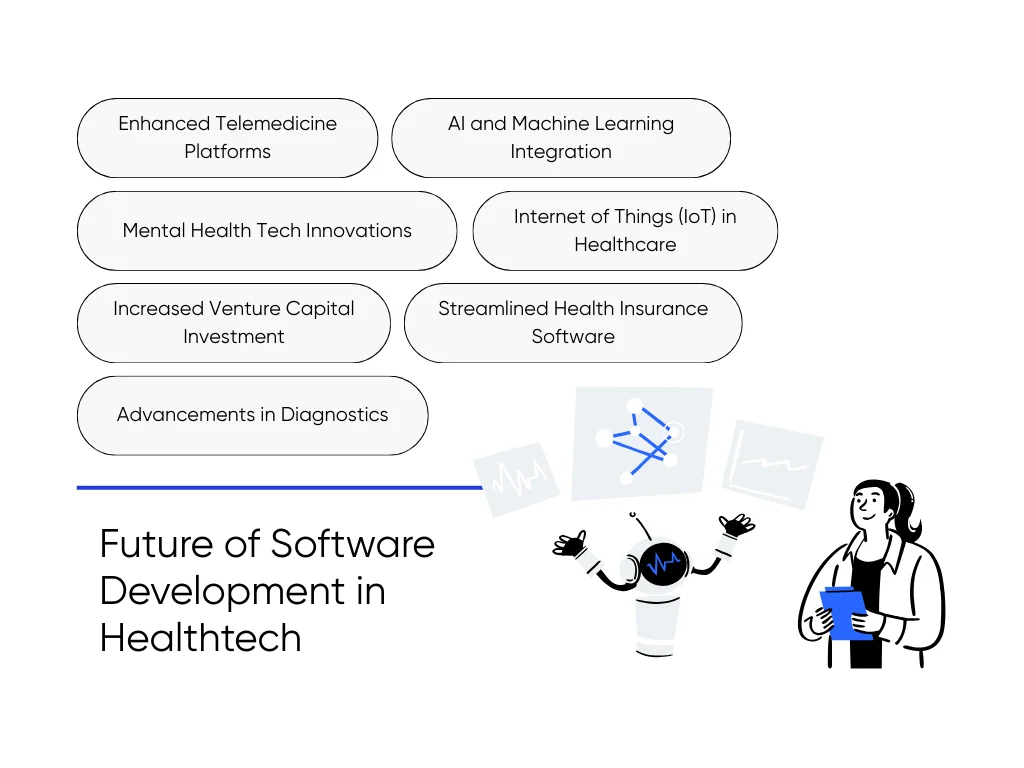
Enhanced Telemedicine Platforms
Healthtech software will continue to improve telemedicine experiences, offering more intuitive user interfaces and seamless integration with other healthcare systems. This will enable remote consultations, digital diagnostics, and remote patient monitoring, promoting accessible and convenient healthcare.
AI and Machine Learning Integration
Software developers will leverage AI and machine learning algorithms to analyze vast amounts of health data, aiding in diagnosis, treatment planning, and predicting patient outcomes. These technologies will enable personalized and data-driven healthcare approaches.
Mental Health Tech Innovations
Software developers will focus on mental health tech, creating innovative solutions to address the growing need for mental healthcare. This includes virtual therapy platforms, mood-tracking apps, and AI-powered chatbots providing mental health support.
Internet of Things (IoT) in Healthcare
Healthtech software will leverage IoT devices like wearable sensors and smart medical devices to gather real-time patient data. This connectivity will enable continuous monitoring, early detection of health issues, and proactive intervention.
Increased Venture Capital Investment
The healthtech industry will attract substantial venture capital investment, driving further innovation. Software developers will have ample resources to develop cutting-edge solutions, leading to diagnostics, treatment, and healthcare management advancements.
Streamlined Health Insurance Software
Software developers will create intuitive and user-friendly health insurance platforms, simplifying the process of managing insurance policies, claims, and reimbursements. This will enhance transparency and efficiency in the health insurance sector.
Advancements in Diagnostics
Healthtech software will incorporate sophisticated algorithms and data analysis techniques, enabling accurate and efficient diagnostics. For example, peptide vendor companies could leverage such tools to monitor peptide research, support tissue repair studies, and contribute to precision medicine and improved patient outcomes. This will aid in early detection of diseases, precision medicine, and improved patient outcomes.
Key Questions and Potential Solutions in Healthtech Industry Concerns
Unlocking the potential of healthtech requires addressing key concerns. From security to accessibility, accuracy to privacy, explore the critical aspects of healthtech and how innovative solutions address these challenges.
- How can we ensure the security of personal health information in healthtech systems?
Solution: Implement robust data encryption and secure storage protocols, conduct regular security audits, and adhere to industry standards and regulations like HIPAA (Health Insurance Portability and Accountability Act).
- What measures can be taken to enhance accessibility in healthtech solutions for all individuals, including those with disabilities or limited technological literacy?
Solution: Design user-friendly interfaces with intuitive navigation, provide options for multiple languages, incorporate assistive technologies for individuals with disabilities (screen readers, voice recognition), and offer user support and training programs.
- How can we address concerns about the accuracy and reliability of healthtech devices and applications?
Solution: Establish rigorous testing and certification processes for healthtech products, conduct clinical trials to validate their efficacy, collaborate with healthcare professionals to ensure accuracy, and provide transparent information about the limitations and potential risks of these technologies.
- What steps can be taken to address privacy concerns related to collecting and using personal health data?
Solution: Obtain explicit user consent for data collection and use, anonymize and aggregate data whenever possible, establish clear data usage policies and strict access controls, and comply with privacy regulations such as GDPR (General Data Protection Regulation).
- How can we bridge the digital divide and ensure equitable access to healthtech solutions in underserved communities?
Solution: Collaborate with community organizations and healthcare providers to raise awareness and provide education about healthtech benefits, offer subsidies or discounts for low-income individuals, develop partnerships to expand internet access, and design solutions that are compatible with a range of devices and internet connectivity options.
Key Takeaways
As this healthtech IT industry overview shows, AI and other frontier technologies are redefining how healthtech is used. Everything from data analytics to connected devices is being reshaped into a single ecosystem that works together to bring better and more accessible care.
If you’re a healthcare organization looking to tap into these advanced technologies, remember that secure data handling and regulatory compliance are just as important as interoperability and analysis accuracy. Without strong software foundations and careful implementation, even the most promising healthtech solutions can fall short.
This is where Aloa can help. We work with healthcare organizations to design and build custom, secure, and compliant software aligned with their real clinical workflows and long-term growth goals.
Interested in working with us? Fill out our client form today, and we’ll get in touch within 24 hours. We also have an AI Builder Community where you can connect with others interested in pioneering AI tech, and a newsletter so you can be the first to know about the latest developments in the expanding world of healthtech.
FAQs
What’s the growth opportunity in the healthcare technology sector?
In 2026, the global healthcare IT industry is expected to grow to a market size of $172.3 billion, up from $94.5 billion in 2021. This is thanks to new growth opportunities all across the sector, driven by healthcare’s transition to AI-powered solutions.
Check out Aloa’s case studies, which showcase the innovative solutions that we’ve built for our clients in the health tech sector.
What are the major sectors within the healthtech industry?
Major healthtech segments include:
- Telemedicine and remote patient monitoring
- Wearable and smart medical devices
- Electronic health records (EHRs)
- Healthcare data analytics
How does telemedicine enhance healthcare accessibility?
Telemedicine allows patients to consult healthcare providers remotely. This eliminates travel barriers, expanding access to underserved populations. Telemedicine also leads to faster consultations and more efficient use of provider time and resources. This can be invaluable for conditions that require constant monitoring and prompt action, such as managing mental health disorders or chronic diseases.
What role does data analytics play in healthtech?
Data analytics helps care providers make better-informed decisions by identifying trends and generating insights based on them. This can lead to benefits such as better resource allocation, predictive interventions, and personalized treatments.
How are wearable medical devices contributing to preventive healthcare?
Wearable devices continuously monitor your vitals, allowing them to detect early signs of potential health issues. Aside from supporting proactive care (i.e., advising you to get a checkup when it looks like a problem is arising), they also make you more aware of the effects of your lifestyle, helping to push you towards better health.
What challenges do healthtech companies face when integrating new technologies?
Healthtech companies can struggle with regulatory compliance, data security, and system interoperability, especially when dealing with unique circumstances and use cases. Fortunately, all of these can be solved with robust governance and technical design. Partnering with a custom healthtech software developer like Aloa ensures that those things get built directly into your solutions.
What future trends are anticipated in the healthtech industry?
Future trends include:
- Enhanced telemedicine platforms
- Deeper AI and machine learning integration
- More mental health tech innovations
- Internet of Things (IoT) in Healthcare
- Increased venture capital investment
- Streamlined health insurance software
- Advancements in diagnostics