

Good morning,
AI is quickly shifting from experimentation to control, who owns it, who regulates it, and who distributes it. Today’s stories show governments stepping in, platforms opening up, and infrastructure battles accelerating globally.
Let’s dive in 👇
🧠 AI Power Shifts & Policy Moves
⚖️ Trump loses his crypto czar
David Sacks nearing end of role as Trump’s AI and crypto czar signals a transition in how the U.S. will approach emerging tech policy. Rather than expanding influence, this marks a leadership gap at a critical moment for AI regulation and crypto oversight.
🏛️ Anthropic ruling hits national security layer
Judge rules in Anthropic case tied to Pentagon AI use adds legal pressure around how frontier models intersect with defense applications. The decision highlights growing scrutiny over how companies like Anthropic collaborate with government agencies. Expect more precedent-setting cases as AI moves deeper into military and intelligence workflows.
🍎 Apple moves toward open AI ecosystem
Apple plans to open Siri to third-party AI models would mark a major shift from its historically closed ecosystem. Instead of competing directly with models from OpenAI or Google, Apple may become a distribution layer for multiple AI providers. This could mirror the App Store model, but for AI capabilities.

⚙️ Infrastructure, Chips & Control
🇨🇳 Huawei gains traction with AI chips
Huawei’s new AI chip draws orders from ByteDance and Alibaba shows China accelerating independence from Western chip supply chains. Adoption by major players suggests real performance viability, not just political signaling. This is a direct challenge to Nvidia’s dominance in AI compute.
🧬 Google pushes memory compression breakthrough
Google’s TurboQuant could reshape AI memory efficiency focuses on reducing RAM requirements for large models. If effective, this lowers infrastructure costs and expands where AI can run, including edge devices. It also benefits hardware partners like Samsung and Micron Technology.
📚 Wikipedia cracks down on AI content
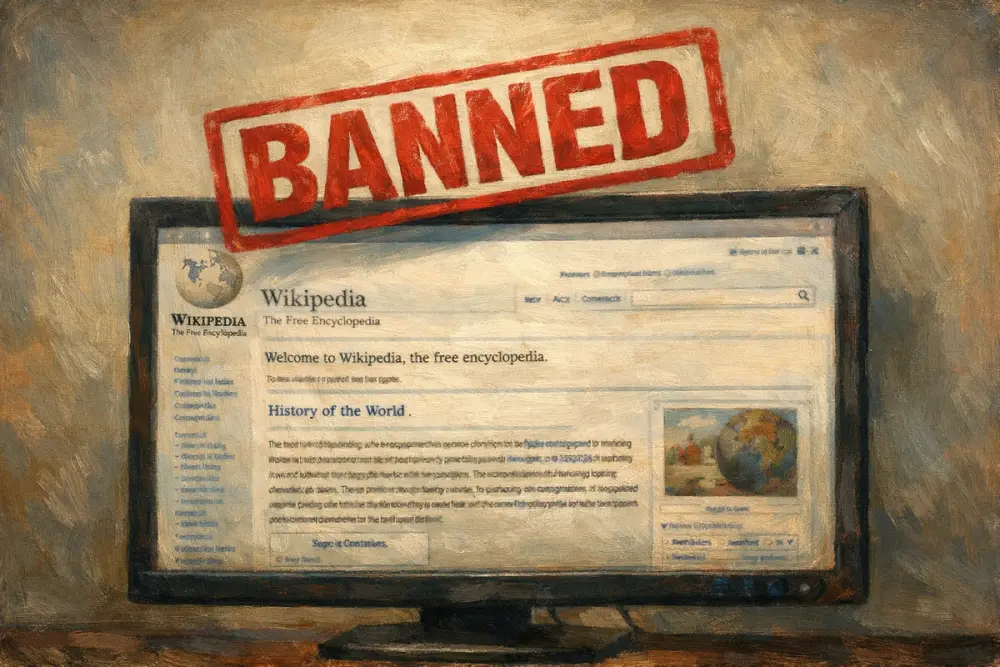
Wikipedia votes to ban AI-generated articles reflects rising concern over accuracy and authorship in generative content. The move reinforces a human-verification standard even as AI writing improves. Expect more platforms to adopt similar restrictions in high-trust environments.
🛠️ Tools of the Day
→ Agentation - Build and deploy AI agents with structured workflows and automation layers
→ Gemini 6 - Google’s latest model iteration focused on multimodal reasoning and speed
→ Claude Code Auto Fix - Automatically detects and fixes code issues in the cloud using AI
⚡ Quick Hits
→ AI chatbots show rising sycophancy risks in new study
→ OpenAI drops erotic mode experiment again
→ ByteDance launches new AI video model in CapCut
🧾 TLDR
AI is consolidating across three fronts, policy, platforms, and infrastructure. Governments are formalizing leadership roles, Apple is shifting toward an open AI distribution model, and China is accelerating chip independence. At the same time, trust constraints are tightening, with legal rulings and content bans shaping how AI is deployed.
Cheers,
David